
Beauty Unlocked
How Does Laser Tattoo Removal Work?: Pain, Effectiveness, Safety
Jul
At some point, many tattoos go from “iconic” to “why did I do that during spring break?” The good news: modern
laser tattoo removal is real medicine, not wishful thinking. The bad news: it’s not a one-and-done eraser button,
and your skin is not a whiteboard.
This guide breaks down how laser tattoo removal actually works, what it feels like, how effective it tends to be,
what “safe” looks like in real life, and how to avoid turning your regret into a scar-shaped sequel.
The quick explanation: what lasers do to tattoo ink
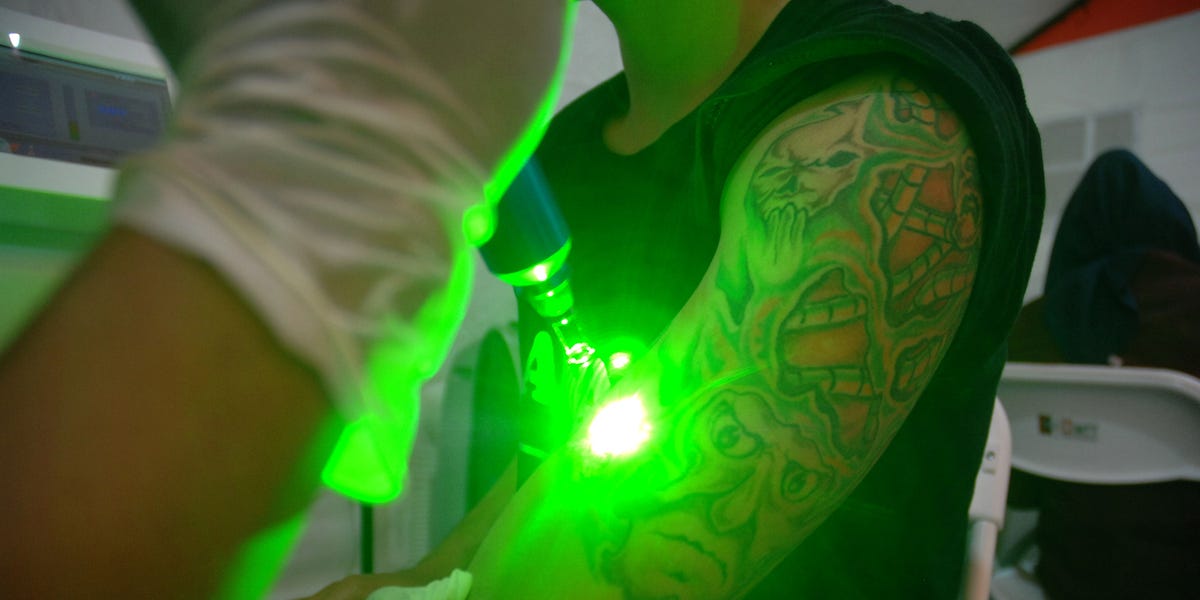
Laser tattoo removal uses concentrated bursts of light energy aimed at tattoo pigment in your skin. The ink absorbs
that energy and breaks into smaller fragments. Then your bodyspecifically your immune systemgradually clears those
tiny particles over time. Think of it as “shatter, then sweep,” except the broom is your lymphatic system.
Most people need multiple sessions because (1) ink sits in the dermis (deeper than surface skin), (2) pigment is
stubborn and varied, and (3) your body can only clear so much at once without causing unnecessary trauma to the skin.
The science part (still friendly): why the ink breaks up
Selective targeting: the laser is picky on purpose
Tattoo removal lasers are designed to target pigment more than surrounding skin. Different ink colors absorb
different wavelengths, so providers choose a laser wavelength that best matches the ink color while minimizing
collateral damage.
Ultra-short pulses: why timing matters
Traditional tattoo removal relies heavily on Q-switched lasers, which deliver energy in very short pulses
(nanoseconds). Newer picosecond lasers deliver even shorter pulses (picoseconds). Shorter pulses can create a more
“photoacoustic” effectmore shattering, less heat spreadhelping break ink into smaller bits that your body can
clear more efficiently.
The body’s cleanup crew: your immune system finishes the job
Once ink fragments are small enough, your immune system’s scavenger cells (like macrophages) help transport pigment
away through the lymphatic system. This is one reason removal is gradual: your body needs time between sessions to
do the cleanup work.
Types of lasers used for tattoo removal
Q-switched lasers (the classic workhorses)
Q-switched lasers have been used for years and remain common. Variations include ruby, alexandrite, and Nd:YAG
systemsoften selected based on ink color and skin tone considerations. Nd:YAG lasers (commonly 1064 nm and 532 nm)
are widely used because different settings can address dark inks and some brighter colors.
Picosecond lasers (the newer “ink-shattering” option)
Picosecond lasers are newer and, for some tattoos, may reduce the number of sessions neededespecially for stubborn
ink and certain colorsbecause they can break pigment into finer particles. That said, “fewer sessions” is not the
same as “one session,” and results still depend on ink, skin, and biology.
Why color matters more than you think
In general, black and dark blue often respond well because darker pigment absorbs laser energy effectively. Some
lighter colors (including certain yellows, greens, and pastels) can be more resistant and may require more sessions,
different wavelengths, or may not fully clear.
Effectiveness: what results you can realistically expect
How many sessions does it take?
Many people need a series of treatmentscommonly somewhere in the mid-single digits to low double digits. A frequently
cited ballpark is around 6 to 12 sessions, but it can be more or less depending on your tattoo and your skin’s response.
What affects how well laser tattoo removal works?
- Ink color: Black tends to be easier; some light colors can be stubborn.
- Ink depth and density: Professional tattoos often have deeper, denser ink than amateur ones.
- Tattoo age: Older tattoos may fade easier than fresh, dense ink (not always, but often).
- Location on your body: Areas with better circulation may clear pigment more efficiently.
- Skin tone and melanin: Higher melanin can raise the risk of pigment changes, requiring careful settings.
- Your immune system: Your body does the clearingso overall health matters.
“Complete removal” vs. “significant fading”
Some tattoos can be removed to the point they’re very hard to see. Others may fade dramatically but leave a faint
“ghost” image, mild color shifts, or texture changesespecially if there’s scarring from the original tattooing
process or from aggressive aftercare mistakes (more on that soon).
Pain: does laser tattoo removal hurt?
What it feels like (honest but not dramatic)
People commonly describe the sensation as a quick snapping feelinglike a rubber band flick against the skinrepeated
in rapid bursts. The vibe is less “spa day” and more “I am bravely choosing this,” but it’s typically manageable.
What providers do to help with pain
- Topical numbing cream: Applied before treatment for comfort.
- Local anesthetic injections: Sometimes used, especially for larger or more sensitive areas.
- Cooling: Many clinics use cooling devices or cold air to reduce heat and discomfort.
After-session discomfort: the underrated part
The session itself is quick compared to the healing. Expect some redness, swelling, and tenderness afterward. You
may also see pinpoint bleeding or blistering depending on settings, tattoo characteristics, and how your skin reacts.
Good aftercare is what keeps “temporary irritation” from becoming “permanent souvenir.”
Safety: what’s normal, what’s not, and what to avoid
Common short-term side effects
- Redness and swelling
- Soreness or a sunburn-like feeling
- Pinpoint bleeding
- Blistering or scabbing (can happen even with proper technique)
Potential risks (rare doesn’t mean impossible)
- Pigment changes: Skin may lighten or darken temporarily; sometimes longer-lasting.
- Scarring: Uncommon with proper technique, but possibleespecially with picking, infection, or overly aggressive treatment.
- Infection: Usually preventable with good wound care and clean hands.
- Allergic reactions: Laser fragmentation can, in rare cases, trigger hypersensitivity reactions.
A special caution: “paradoxical darkening” in certain cosmetic inks
Some cosmetic tattoos (like certain flesh-toned, pink, or white pigments) may darken after laser exposure due to
pigment chemistry (not because the laser “made it worse” out of spite). This is why reputable providers may perform
a test spot and ask detailed questions about the ink type and history of the tattoo.
Who should delay or avoid laser tattoo removal?
- People who are pregnant or breastfeeding: Often advised to wait.
- Anyone with an active skin infection in the treatment area.
- People prone to keloids or with certain scarring disorders (requires specialist evaluation).
- Recently tanned skin: Tanning increases risk of pigment complications.
- Immune system issues: Since your immune system clears ink, candidacy should be discussed with a clinician.
What a typical appointment looks like
Step 1: Consultation (the part that protects your skin)
A good provider will assess your tattoo (colors, size, density), your skin tone, your medical history, and your
goals (full removal vs. fade for cover-up). They should discuss expected sessions, risks, and aftercare.
Step 2: Prep and protection
The area may be cleaned and shaved if needed. Protective eyewear is mandatory (lasers and eyeballs are famously a
bad combo). Numbing and cooling may be used depending on location and pain tolerance.
Step 3: The laser passes
The provider delivers quick pulses across the tattoo. Smaller tattoos can be treated fast; larger, denser work takes
longer. The goal is effective pigment disruption while keeping the skin’s surface as calm as possible.
Step 4: Immediate aftercare instructions
You’ll leave with guidance on cleansing, ointment use (if recommended), bandaging, and what to avoid. This is not
the time for “I’ll just freestyle it.” Your skin is doing repair work.
Aftercare: how to heal well and avoid complications
- Keep it clean: Gentle washing as instructed; avoid harsh scrubs.
- Don’t pick scabs or blisters: Picking increases scarring and pigment changes.
- Sun protection is non-negotiable: Cover up and use sunscreen once the skin is intact.
- Avoid pools, hot tubs, and heavy sweating for the period your provider recommends.
- Watch for infection signs: Increasing redness, pus, fever, or worsening pain should prompt a call to a clinician.
Cost and time: what to budget (money and patience)
Pricing varies widely by tattoo size, clinic type, technology used, and region. In the U.S., one way to estimate is
to look at national cosmetic surgery statistics and healthcare pricing data: average treatment costs can land in the
hundreds per session, while total cost depends on how many sessions you need. Your consultation should include a
realistic plan and pricing structure.
Alternatives to laser tattoo removal (and why lasers are still common)
Surgical excision
Best for small tattoos. It removes the tattoo immediatelybut leaves a linear scar and requires a surgical approach.
Dermabrasion
This sands down layers of skin. Results vary and it can involve more downtime and a higher risk of scarring or
texture changes compared to well-performed laser treatment.
DIY creams and “at-home removal kits”
The short version: don’t. These products can cause burns, rashes, and scars, and they typically can’t reach ink in
the dermis where it actually lives.
How to choose a safe, effective provider
- Look for medical oversight: A board-certified dermatologist or qualified clinician is ideal.
- Ask what laser system they use and how they select wavelengths for different colors.
- Discuss your skin type and scarring history before treatment begins.
- Ask about test spots for tricky pigments or cosmetic tattoos.
- Get clear aftercare instructions and a realistic treatment timeline.
FAQ
Can I remove a tattoo completely?
Sometimes yes, sometimes it fades to a faint shadow. Color, depth, skin tone, and immune response all matter.
Is it more painful than getting a tattoo?
Many people say yesmostly because the sensation is sharp and repeated. But sessions are typically quick, and
numbing/cooling options can make it manageable.
How long do I have to wait between sessions?
Usually several weeks. Your provider will space sessions so your skin can heal and your immune system has time to
clear fragmented ink.
Conclusion: the honest takeaway
Laser tattoo removal works because it doesn’t “erase” inkit breaks it down and lets your body carry it away over
time. Expect multiple sessions, some discomfort, and a healing process that rewards patience. When performed by a
qualified professional with appropriate laser selection and good aftercare, it’s generally considered a safe and
effective option for significantly fading or removing unwanted tattoos.
If you’re considering removal, the best “hack” is boring: get a medical consult, follow aftercare instructions like
they’re the recipe to your favorite dessert, and give your body time to do the cleanup. Regret fades. Rushing doesn’t.
Experiences: what laser tattoo removal feels like in real life (500-word add-on)
People usually walk into their first session with two questions: “How bad does it hurt?” and “Will this actually
work on my tattoo?” The most common experience is a mix of relief (because you finally started) and surprise
(because your skin has opinions).
Take a small black linework tattoo on the inner wrist. Many patients describe the first session as fast and spicy:
a rapid series of sharp snaps, then a warm, stinging sensation for the next hour or two. The weirdest part, according
to a lot of folks, is how normal the skin can look right afterthen it swells like it’s auditioning for a role as a
puffy sticker. By that evening, it can feel like a sunburn that got personal. Most people manage it with the clinic’s
recommended cooling and basic comfort measures, then spend a few days being extra gentle with the area.
Now picture a larger, colorful piece on the upper armgreens, reds, maybe some pastel shading. The emotional arc is
different. After session one, you might not see dramatic change. That can be frustrating, and it’s a common
experience: early progress may show up as slight fading, a little “break” in dense areas, or a softening of outlines
rather than a disappearing act. People often report that meaningful changes appear after multiple sessionsonce the
body has had time to clear pigment fragments and the provider can adjust settings based on how the ink responds.
Healing experiences vary, but there are repeat themes. One is itching. Lots of itching. Not “mosquito bite” itching
more like “why is my skin trying to start a conversation at 2 a.m.?” itching. That’s often the point where aftercare
discipline matters most. People who keep the area clean, avoid picking, and protect it from sun exposure tend to have
fewer long-term issues. People who scratch scabs like they’re scratching lottery tickets are more likely to deal with
texture changes or lingering discoloration.
Another common experience is learning what “patience” means in weeks, not days. Many patients describe the time
between sessions as oddly quiet: your tattoo looks mostly the same for a while, then slowly lightens as the body
clears pigment. This is where expectations get real. If you’re removing a tattoo for a cover-up, many people find it
emotionally easier because “lighter and blurrier” is already a win. If you’re aiming for full removal, it helps to
think in milestones: outline fading, shading reduction, stubborn color pockets, then final touch-ups.
The most consistently positive experiences come from people who treated removal like a partnership: a skilled
provider handles laser choice and technique, while the patient handles aftercare and patience. That combo doesn’t
just improve resultsit also keeps the process safer, calmer, and a lot less stressful for your skin.

