
Beauty Tools & Accessories
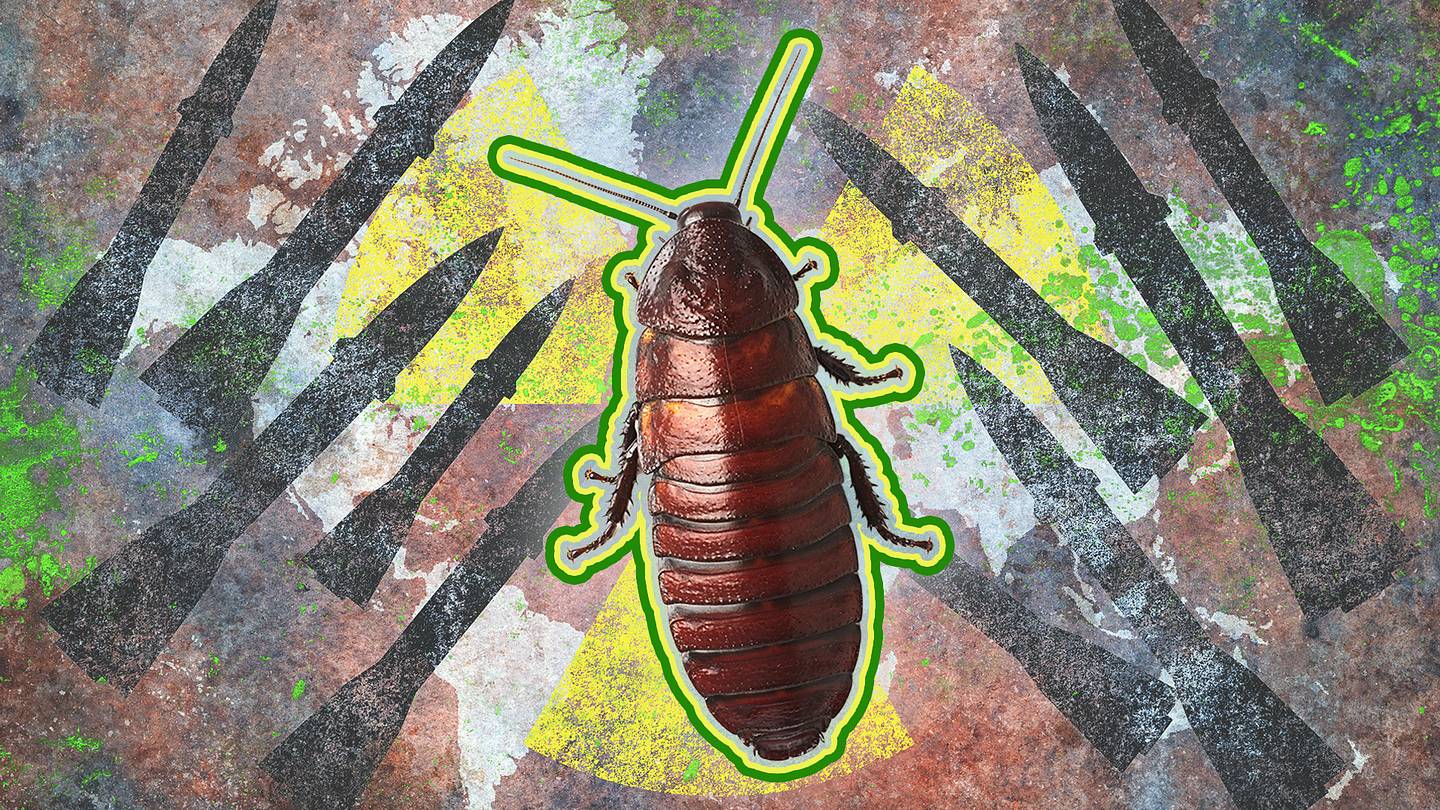
Could Cockroaches Really Survive a Nuclear War?
Jul
It is one of the internet’s favorite creepy little “facts”: after a nuclear war, the only things left will be cockroaches, taxes, and maybe one suspiciously durable fruitcake. Cockroaches have earned a legendary reputation for survival, and to be fair, they are not exactly delicate. They squeeze through cracks, eat almost anything, reproduce with alarming enthusiasm, and show up in kitchens like they pay rent.
But could cockroaches really survive a nuclear war? The honest answer is: some cockroaches might survive some parts of a nuclear disaster, but they are not magical, radiation-proof apocalypse kings. A cockroach near the center of a nuclear explosion would be vaporized, burned, crushed, or otherwise turned into a very tiny tragedy. A cockroach hidden far away in a basement, sewer, subway tunnel, or wall void might have a better chance than a human standing outdoors. That is less because cockroaches are superheroes and more because they are small, sheltered, biologically simple, and famously good at hiding from both danger and your landlord’s pest-control bill.
So let’s crawl past the myth, sweep away the dramatic movie dust, and look at the science behind cockroaches, nuclear radiation, fallout, and survival.
The Origin of the Cockroach Nuclear War Myth
The idea that cockroaches could survive nuclear war likely grew after the atomic bombings of Hiroshima and Nagasaki, when reports suggested insects were seen in devastated areas after the explosions. Over time, that observation mutated into a much bigger claim: cockroaches can survive nuclear blasts. Then pop culture did what pop culture does bestit added a leather jacket, sunglasses, and a catchphrase.
The myth survived because cockroaches are already hard to kill in everyday life. If one scuttles under the fridge after a shoe attack, it feels immortal. If an apartment building has an infestation that survives sprays, traps, and one angry tenant with a broom, the legend becomes believable. But surviving household inconvenience is not the same thing as surviving the heat, shockwave, and radioactive fallout from nuclear weapons.
First, What Happens in a Nuclear Explosion?
A nuclear explosion is not just “radiation” in the way many people imagine. It is a stack of disasters arriving almost at once. There is an intense flash of light and heat, a blast wave powerful enough to flatten buildings near the detonation point, fires, flying debris, and radioactive fallout if the explosion pulls soil, dust, and debris into the atmosphere. In a larger nuclear conflict, smoke from widespread fires could also affect climate and agriculture, creating what is often called nuclear winter.
This matters because people often ask whether cockroaches can survive radiation, but radiation is only one part of the problem. A cockroach cannot “tough it out” through being incinerated. It cannot flex its six legs and walk away from a collapsing building at ground zero. It cannot negotiate with a firestorm. At close range, the answer is simple: no living cockroach survives a direct nuclear blast.
Could Cockroaches Survive Nuclear Radiation?
Cockroaches are more resistant to radiation than humans, but not nearly as resistant as the legend suggests. High doses of ionizing radiation damage cells and DNA. In humans, rapidly dividing cellssuch as those in bone marrow, the digestive tract, and reproductive tissuesare especially vulnerable. Severe exposure can cause acute radiation sickness, burns, organ damage, increased cancer risk, and death.
Cockroaches have an advantage because many of their cells do not divide as constantly as human cells. Insects are especially vulnerable to radiation during certain growth stages, such as molting, when cell division is more active. If a cockroach is not in that vulnerable phase, it may tolerate a radiation burst better than a mammal.
Experiments and scientific summaries commonly place cockroach radiation tolerance several times higher than that of humans. Some cockroaches can survive radiation levels that would be lethal to people. However, at extreme doses, cockroaches die too. In well-known radiation tests, cockroaches survived moderate high exposures longer than humans would, but they did not survive the highest levels. Even more embarrassing for the roach fan club, flour beetles performed better than cockroaches in some comparisons. Imagine building your entire apocalypse brand and losing to pantry pests.
Why Cockroaches Are So Hard to Kill
Even if cockroaches are not radiation-proof, they are impressive survivors. Their toughness comes from a combination of biology, behavior, and a lifestyle that can politely be described as “low standards.”
They Hide Extremely Well
Cockroaches prefer dark, narrow, protected spaces. Cracks, drains, wall voids, basements, crawl spaces, sewer lines, and cluttered storage areas are perfect for them. In a nuclear event, shelter matters enormously. A human outside is exposed to heat, blast, debris, and fallout. A cockroach deep inside a protected crevice may avoid some of those effects simply because several layers of material stand between it and the hazard.
They Eat Almost Anything
Cockroaches are opportunistic scavengers. Depending on the species and environment, they may feed on crumbs, grease, decaying organic matter, paper, cardboard glue, dead insects, pet food, and other scraps. This does not mean they can live happily in a completely sterile wasteland, but it does mean they can exploit resources that many animals would ignore.
They Reproduce Efficiently
Cockroaches produce egg cases called oothecae. The number of eggs and reproductive speed depend on the species, but many common pest cockroaches can build populations quickly when food, water, warmth, and shelter are available. This is one reason infestations can feel like they appear overnight, even though the roaches have usually been holding a secret family reunion behind the cabinets for weeks.
They Have Flexible Bodies
Cockroaches have flat bodies that allow them to squeeze into tight spaces. They can move quickly, change direction suddenly, and survive physical compression that would injure many larger animals. Their exoskeleton provides protection, and their small size helps them hide from predators and environmental hazards.
They Can Survive Short-Term Hardship
Roaches can endure periods without food, though water remains critical. They can slow down, hide, and wait for better conditions. That kind of patience is useful after disturbances such as floods, fires, or building damage. It might also help some populations persist after a nuclear event, especially outside the most heavily destroyed zones.
Where Cockroaches Might Survive After a Nuclear Attack
If a nuclear weapon detonated in or near a city, cockroach survival would depend heavily on distance, shelter, species, and local conditions. The closer to ground zero, the worse the odds. The farther from the blast and the deeper the shelter, the better the odds.
Possible survival zones could include underground sewer systems, subway tunnels, basements, utility corridors, thick-walled buildings, buried debris pockets, and protected rural structures. These places could reduce exposure to heat, blast pressure, and fallout particles. A cockroach inside a deep crack in a concrete basement miles from the detonation would have a very different experience from a cockroach strolling across a sidewalk near the fireball. The sidewalk roach does not get a sequel.
However, surviving the first event is not the same as thriving afterward. Cockroaches would still need water, food, suitable temperatures, and a way to reproduce. If the surrounding ecosystem collapsed, human food waste disappeared, buildings burned, water sources became contaminated, and temperatures dropped due to smoke-blocked sunlight, many cockroach populations would suffer.
Could Cockroaches Survive Nuclear Fallout?
Radioactive fallout consists of particles created when debris, dust, soil, and other material become radioactive and fall back to the ground after a nuclear explosion. Fallout can expose living organisms externally, through particles on surfaces, and internally, if radioactive material is inhaled or ingested.
Cockroaches hidden indoors or underground might avoid much of the fallout dust. Their small size and secretive habits could help. But fallout would still be dangerous. Radiation can damage DNA, reduce fertility, impair development, and eventually kill insects at high enough doses. Even if adult cockroaches survived initial exposure, their eggs or nymphs might not develop normally. A population that cannot reproduce is not truly winning the apocalypse; it is just taking a delayed exit.
The Nuclear Winter Problem
A full-scale nuclear war could create problems far beyond the blast zones. Widespread fires could send soot into the upper atmosphere, reducing sunlight, cooling temperatures, and disrupting agriculture. Humans would face food shortages, infrastructure collapse, disease, and social chaos. Cockroaches would face a different but still serious challenge: fewer warm buildings, less human food waste, damaged water systems, and unstable habitats.
Some cockroach species depend heavily on human environments. German cockroaches, for example, are strongly associated with heated buildings, restaurants, apartments, kitchens, and other indoor spaces. If those environments disappeared or became uninhabitable, their numbers could crash. Outdoor species might do better in some regions, but cold, drought, fire, and food-chain disruption would still matter.
Are Cockroaches the Best Apocalypse Survivors?
Not even close. Cockroaches are tough, but many organisms can outperform them in extreme conditions. Certain bacteria, fungi, tardigrades, nematodes, some wasps, beetles, and other insects may tolerate harsh environments better. Microbes, in particular, are the true heavyweight champions of survival. They have been surviving disasters since before cockroaches had the nerve to become kitchen celebrities.
The cockroach myth persists because cockroaches are visible, familiar, and emotionally offensive. People notice them. Nobody screams, “There is a radiation-resistant microbe in the pantry!” while standing on a chair. Cockroaches get the publicity because they show up where humans live, eat, and panic.
What About the Famous “Headless Cockroach” Fact?
Another popular claim is that a cockroach can live for days without its head. This is partly true in a limited biological sense. Cockroaches do not breathe through their mouths the way humans do; they breathe through openings called spiracles along their bodies. Their circulatory system is also very different from ours. Losing the head does not instantly cause the same catastrophic blood-pressure failure that it would in a mammal.
But this does not make cockroaches immortal. A headless cockroach cannot drink, navigate normally, or live indefinitely. Eventually it dies from dehydration, infection, injury, or starvation. It is a creepy survival trick, not a long-term lifestyle plan. Even cockroaches need a head eventually, which is a comforting thought for anyone currently losing an argument with one in the bathroom.
Human Survival vs. Cockroach Survival
When people say cockroaches could survive nuclear war, they often compare roaches to humans. In some ways, that comparison is unfair. Humans are large, warm-blooded, socially dependent, and reliant on complex infrastructure. We need clean water, food systems, shelter, medicine, electricity, sanitation, and communication. Cockroaches need a crack, moisture, and something disgusting enough to eat.
That said, humans are not helpless. Proper sheltering can dramatically reduce fallout exposure. Thick walls, basements, underground spaces, and time all matter. Radiation from fallout decreases over time, and emergency guidance typically emphasizes getting inside, staying inside, and staying tuned for official instructions. Humans cannot survive a direct blast at close range any more than cockroaches can, but outside the immediate destruction zone, preparation and shelter can save lives.
The Real Answer: Yes, No, and “It Depends”
So, could cockroaches really survive a nuclear war? The best answer is layered:
- Could a cockroach survive at ground zero? No. Heat, blast pressure, and fire would kill it.
- Could cockroaches survive radiation levels that kill humans? Yes, in many cases, but only up to a limit.
- Could some cockroach populations survive outside major blast zones? Very possibly, especially in sheltered locations.
- Would cockroaches be the only survivors? Absolutely not. Many organisms are tougher in extreme environments.
- Would they inherit the Earth? Only if the beetles, bacteria, fungi, and other tiny survival experts were too busy laughing.
Cockroaches are durable, but the myth exaggerates their abilities. They are survivors, not superheroes. Their real advantage is not invincibility; it is adaptability. They hide, reproduce, scavenge, and exploit human-made environments with disgusting efficiency. In a nuclear disaster, those traits could help some of them endure, but survival would never be guaranteed.
Practical Lessons From the Cockroach Myth
The cockroach nuclear war myth is useful because it teaches a bigger lesson about survival. Toughness is rarely about one magical trait. It is usually about layers of advantages. Cockroaches do not survive because they are immune to everything. They survive because they combine small size, shelter-seeking behavior, flexible diets, fast reproduction, and biological tolerance.
Humans can learn from that, minus the part where we live behind refrigerators. In emergencies, survival improves with shelter, preparation, redundancy, and adaptability. A basement is better than open air. Stored water is better than wishful thinking. Good information is better than rumors. And no, taping a cockroach to your emergency kit does not count as a preparedness strategy.
Experiences and Everyday Observations Related to Cockroach Survival
Anyone who has dealt with cockroaches knows why the nuclear war myth feels believable. You turn on the kitchen light at midnight, and there it is: a roach standing in the middle of the floor like it owns the mortgage. You grab a shoe, it vanishes under a gap so thin it looks painted on. The next night, another one appears, possibly wearing the expression of a tiny villain who has read your pest-control receipts.
In apartment buildings, restaurants, dorms, and older homes, cockroaches often seem to survive everything because the visible roach is only the ambassador. The real population is hidden. They are behind appliances, inside wall voids, near plumbing, under sinks, in cardboard boxes, and around warm motors. When people spray only the roaches they see, they may kill a few individuals while the rest of the colony remains protected. This everyday experience mirrors the nuclear survival question: exposure matters. The roach in the open is vulnerable. The roach hidden deep in a protected space has better odds.
Another common experience is the “clean house but still roaches” problem. Many people assume cockroaches only appear in dirty spaces, but that is not entirely fair. Sanitation matters a lot, but roaches also need moisture, warmth, and access. A tiny leak under a sink, crumbs behind an oven, pet food left overnight, or gaps around pipes can support them. In multi-unit housing, they may travel between apartments through shared walls and plumbing routes. In other words, cockroaches survive not because they are invincible, but because they are excellent at using overlooked resources.
People who have tried to eliminate roaches also learn that resilience is partly about reproduction. One cockroach sighting may mean more are hidden. Egg cases can protect developing young, and populations can rebound if control efforts miss nesting areas. This is why professional pest management usually focuses on identification, sanitation, sealing entry points, reducing moisture, and using targeted baits rather than relying only on sprays. A quick blast of aerosol may feel satisfying, but it can scatter roaches and miss the source. The cockroach, meanwhile, files the experience under “minor inconvenience.”
The nuclear war myth also reflects how humans respond emotionally to pests. Cockroaches make people feel invaded. They appear suddenly, move quickly, and violate the sacred boundary between “my home” and “absolutely not.” Because they already seem unnatural in daily life, it is easy to believe they could shrug off the end of civilization. But real-world pest experience shows the truth more clearly: cockroaches survive best when they have shelter, moisture, food, and time. Remove those advantages, and they become much less impressive.
That is the useful takeaway. Whether we are talking about a kitchen infestation or a theoretical post-nuclear environment, cockroach survival is not magic. It is ecology. Give them cracks, warmth, water, and leftovers, and they thrive. Expose them directly to heat, pressure, poison, starvation, dehydration, or intense radiation, and they die like other living things. The legend is fun, but the reality is better: cockroaches are not immortalthey are just annoyingly well prepared.
Conclusion: The Roach Is Tough, But Not a Tiny Superhero
Cockroaches could survive certain nuclear-war conditions better than humans, especially if they were far from the blast and protected inside underground or indoor shelters. They can tolerate higher radiation doses than people, hide in excellent micro-shelters, eat a wide range of organic material, and reproduce efficiently when conditions allow. That makes them formidable survivors.
But the idea that cockroaches could casually stroll through a nuclear war untouched is pure myth with six legs. A direct blast would kill them. Extreme radiation would kill them. Long-term ecological collapse could starve or freeze many populations. They are tough, but not unbeatable.
The real post-nuclear survivors would likely be a mix of microbes, insects, hardy plants, fungi, underground organisms, and sheltered animal populationsnot just cockroaches holding a victory parade in the ruins. Still, the cockroach deserves some reluctant respect. It may not inherit the Earth, but it would probably find the last crumb before anyone else.
Note: This article is written for general educational and SEO publishing purposes. It explains scientific concepts about cockroaches, radiation, and nuclear survival in plain American English without encouraging panic or treating nuclear emergencies lightly.

