
Beauty Tools & Accessories
Restaurant Visit: V & A Reading Room in London
Jun
Some places invite you to eat. Others invite you to slow down, look up, read a page, sip something civilized, and pretend for one glorious hour that your inbox has been sealed in a medieval reliquary. The V & A Reading Room in London belongs to that second, far rarer category: part cultural pause, part design object, part “why don’t all bookstores serve wine?” daydream.
To be accurate, the name “V & A Reading Room” can point travelers in two slightly different directions. Historically, the Victoria & Albert Reading Rooms referred to a stand-alone bookshop and wine bar near the museum on Exhibition Road, a short stroll from South Kensington Station. Today, visitors looking for the closest living version of that atmosphere will likely find it inside the Victoria and Albert Museum itself, especially in the V&A Café and its legendary Refreshment Rooms: the Gamble Room, Poynter Room, and Morris Room. Together, these spaces create one of London’s most memorable food-and-culture experiences.
This restaurant visit, then, is not just about what lands on the plate. It is about the joy of dining where books, design, architecture, museum culture, and a well-timed coffee break all politely elbow each other for attention.
What Was the V & A Reading Room?
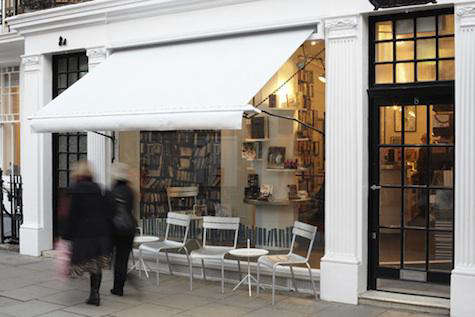
The original V & A Reading Room was a delightfully specific London idea: a place where browsing books and drinking wine were not treated as competing hobbies. Opened near the Victoria and Albert Museum on Exhibition Road, it combined a bookshop, reading space, coffee stop, and wine bar. In other words, it understood human civilization at a very advanced level.
Its shelves reportedly featured a rotating selection of more than 1,000 new and vintage titles, with subjects tied naturally to the V&A’s strengths: design, fashion, art, biography, history, and fiction. The space also had a strong design identity. It used the iconic 606 Universal Shelving System by Dieter Rams, a clean-lined modernist choice that made the room feel more like a curated studio than a cluttered shop. Add wallpaper that played with the illusion of bookshelves, and the result was witty, stylish, and very London: serious about design, but not so serious that it forgot to pour a drink.
For travelers searching for “V & A Reading Room London restaurant,” the key is to understand the spirit of the place. It was not a traditional restaurant with white tablecloths and a maître d’ guarding the door like a minor royal. It was a cultural hangout: the kind of place where a glass of red, a design monograph, and a plate of something simple could turn a rainy afternoon into a miniature holiday.
The Modern Visitor’s Best Bet: The V&A Café
While the old Reading Room concept lives on most clearly in memory and design-travel archives, the Victoria and Albert Museum’s own café is very much alive and worth planning around. The V&A Café is not merely convenient museum fuel. It is widely described as the world’s oldest museum restaurant, and that claim matters because the rooms themselves are part of the experience.
Many museum cafés are designed to help you survive until dinner. The V&A Café feels more like an exhibit that happens to serve cake. The main dining rooms date back to the Victorian era, when the museum pioneered the idea that visitors might want refreshment during a long cultural outing. This was visionary. Anyone who has spent three hours trying to understand ceramics, fashion, medieval metalwork, and the emotional life of marble statues knows that blood sugar is not a trivial matter.
The food offering is casual and broad: coffee, tea, pastries, sandwiches, salads, cakes, scones, and hot dishes depending on the time of day. It is family-friendly, practical, and flexible enough for a quick stop or a lingering lunch. But the real reason to go is the setting. You can eat in rooms designed by James Gamble, Edward Poynter, and William Morris. Most lunches cannot say that. Your average sandwich has never been supervised by the ghosts of the Arts and Crafts movement.
Atmosphere: Books, Tiles, Light, and London Calm
The magic of a V & A Reading Room-style visit is atmosphere. This is not a shouty, high-volume, elbows-on-the-table dining scene. It is a slow experience. The best version begins with a walk through South Kensington, past museum façades and clusters of students, tourists, families, and Londoners pretending they are not tourists in their own city.
Inside the museum, the transition is immediate. London’s traffic noise disappears. The building takes over. The V&A does not whisper; it stages a full design opera. Columns, tiles, mosaics, staircases, arches, glass, metalwork, and carved details appear in every direction. By the time you reach the café, you have already been gently bullied by beauty.
The Gamble Room is the most theatrical. It is grand, warm, richly decorated, and almost impossible to ignore. There are ceramic tiles, stained glass, gilded accents, and large glowing lights that make the ceiling feel festive even on a gray London day. The Poynter Room is smaller and more intimate, with blue-and-white tilework and decorative details that reward close looking. The Morris Room is moodier, greener, and calmer, showing William Morris’s early design language before his patterns became the visual equivalent of a national treasure.
If the historic V & A Reading Room was a bookish wine-bar fantasy, the V&A Café is its older, grander cousin: more museum palace than hidden nook, but still deeply suited to anyone who likes reading, design, and snacks that come with intellectual justification.
Food and Drink: What to Expect
Do not arrive expecting experimental fine dining. This is not the place for foam, tweezers, or a waiter explaining that your carrot has been “listening to the sea.” The V&A Café is closer to a polished museum café with unusually spectacular rooms. Its strengths are accessibility, variety, and setting.
Breakfast might mean a barista-made coffee with a pastry. Lunch could be a seasonal hot dish, salad, sandwich, or something from the cold counter. Afternoon is ideal for tea, cake, scones, or a light snack after gallery wandering. Families are also considered, with children’s lunch options often available in the main café area.
The food should be judged in context. You are not just paying for calories. You are paying, in part, for the privilege of sitting under a decorated Victorian ceiling while recovering from the museum’s enormous collection. A slice of cake tastes better when eaten in a room that looks like it took several committees, three designers, and a small army of tile specialists to complete.
Best Time to Visit
For the most relaxed experience, aim for late morning or mid-afternoon outside peak lunch hours. Around noon to 2 p.m., the café can get busy, especially on weekends, holidays, and rainy days when half of London appears to have remembered that museums have roofs. If you want a more contemplative Reading Room mood, arrive when the crowds are in the galleries, not when everyone has simultaneously decided that soup is urgent.
Friday evenings can be special when the museum runs late openings or selected late events, but schedules and food service can change. Always check the official V&A visitor information before planning a food-centered trip. Nothing ruins a romantic design pilgrimage faster than discovering that the hot counter closed before your appetite made its formal entrance.
Design Details That Make the Visit Special
The V&A’s dining rooms are not decorative afterthoughts. They were built to show that public refreshment spaces could also be educational, artistic, and modern for their time. The Gamble Room used colorful ceramic, glass, enamel, and iron surfaces not only for beauty, but also for practical reasons such as hygiene, fire resistance, and durability. Victorian design often liked to multitask: if a surface could be washable, symbolic, morally uplifting, and slightly overwhelming, all the better.
The Poynter Room began life as a grill room. It once had fittings for cooking chops and steaks, which sounds charming until you remember that Victorian ventilation and open flames were having a very complicated relationship. Its decorative tiles include seasonal and mythological motifs, and the room’s blue-and-white palette gives it a more focused, jewel-box quality.
The Morris Room offers a different rhythm. Instead of the Gamble Room’s bright spectacle, it leans into wood, green tones, medieval influence, and the early Arts and Crafts sensibility. It is a fine place to sit if you want your tea with a side of decorative philosophy. The room quietly argues that beauty belongs in everyday life, even if everyday life is currently asking whether you should order another scone.
How It Compares to a Traditional London Restaurant
A meal connected to the V & A Reading Room is not like dinner in Soho, brunch in Shoreditch, or a tasting menu in Mayfair. Its appeal is not speed, trendiness, or culinary theatrics. Its appeal is layered experience.
You get location: South Kensington, one of London’s great museum neighborhoods. You get culture: the Victoria and Albert Museum, a world-class institution devoted to art, design, performance, fashion, craft, and decorative arts. You get architecture: a building that turns hallways into small adventures. You get food: simple, useful, and pleasant. And you get atmosphere: the feeling of having stepped into a room where eating and thinking are allowed to happen at the same table.
This makes it especially appealing for solo travelers, couples, design lovers, book people, museum visitors, and anyone who likes a restaurant visit with more texture than “the fries were crispy.” The V&A experience is about context. A coffee here is not merely a coffee. It is a punctuation mark in a day of looking closely.
Practical Tips for Planning Your Visit
Arrive With a Flexible Plan
The V&A is large enough to humble even the most confident itinerary. Instead of trying to see everything, choose two or three galleries, then build in a café break. The food stop should not be an emergency landing. Treat it as part of the visit.
Look Before You Sit
If the café is busy, it is tempting to grab the first open table. Resist for thirty seconds. Walk through the rooms if possible. Each space has a different personality, and choosing your table is part of the pleasure. The Gamble Room is the showstopper, the Poynter Room is a gem, and the Morris Room is the place to feel quietly tasteful.
Check Current Hours
Museum cafés can adjust opening times for events, maintenance, staffing, or special late programs. Before you go, check current V&A Café hours and any event-related service changes. The same advice applies if you hope to visit the National Art Library or study rooms, where rules about access, bags, and food are stricter.
Do Not Bring Food Into Reading or Study Rooms
The romantic idea of reading with a glass of wine is central to the historic V & A Reading Room memory, but the museum’s current library and study spaces are working research environments. Food and drink are not allowed in those areas. Save the cake for the café and the careful page-turning for the library.
Who Will Love This Experience?
The V & A Reading Room experience is ideal for travelers who prefer atmosphere over hype. If your perfect London afternoon includes a museum, a good cup of tea, a beautiful room, and a few quiet minutes pretending you are the main character in a literary travel essay, this is your territory.
Design fans will enjoy the interiors. History lovers will appreciate the Victorian innovation behind museum dining. Book lovers will enjoy the lingering idea of the original Reading Room as a bookstore-wine bar hybrid. Families will appreciate the convenience of on-site food. Solo travelers will feel comfortable lingering without needing to perform the awkward “table for one, but emotionally I am thriving” routine.
Food obsessives should come with the right expectations. This is not London’s most daring kitchen. It is something more unusual: a practical café inside one of the most beautiful dining settings attached to any museum. The food supports the experience rather than dominating it.
Nearby Attractions in South Kensington
One reason the V & A Reading Room concept worked so well is location. South Kensington is one of London’s richest cultural districts. The Natural History Museum and Science Museum are nearby, and Exhibition Road itself has been redesigned to feel more pedestrian-friendly and open. You can easily spend a whole day in the neighborhood without resorting to the dreaded “we’ll just eat something from a station kiosk” strategy.
After the V&A Café, you might walk through the John Madejski Garden at the heart of the museum, browse the museum shop, visit a temporary exhibition, or continue toward Hyde Park and Kensington Gardens. The area rewards wandering. It also rewards comfortable shoes, because London museums are not designed for people who believe 4,000 steps is “a big day.”
Is It Worth Visiting?
Yes, especially if you value places with a story. The V & A Reading Room in London is worth writing about because it captures an idea that still feels fresh: hospitality can be intellectual, design-led, and playful. The original bookshop and wine bar gave visitors a way to browse, sip, and linger near one of the world’s great design museums. The current V&A Café continues that broader spirit by making refreshment part of the museum’s cultural fabric.
Come for lunch, tea, coffee, cake, or a quiet pause between galleries. Come because the rooms are beautiful. Come because a museum café that looks like a decorative arts manifesto is much more memorable than another anonymous latte in a paper cup. Come because London is best when it lets you combine small pleasures: a chair, a book, a drink, a room full of history, and just enough cake to make the afternoon behave itself.
Extra Experience Notes: A Longer Reflection on Visiting the V & A Reading Room in London
The best way to experience a place like the V & A Reading Room is to stop treating it as a box to check off. It is not a landmark you photograph, post, and abandon. It is a mood. It asks for slower travel. That is rare in London, where visitors often ricochet from Buckingham Palace to Westminster to Tower Bridge with the haunted expression of people being chased by their own itinerary.
Imagine arriving in South Kensington on a cool afternoon. The Tube station is busy, as usual, with families negotiating strollers, students carrying portfolios, and tourists staring at maps with the optimism of explorers and the battery life of endangered species. You follow the flow toward Exhibition Road, where the museum buildings rise with the confidence of institutions that know they have survived every fashion trend from bustles to bucket hats.
Before eating, you wander. That is important. You let the museum set the tone. Maybe you start with fashion galleries, where garments seem to whisper that your travel outfit could have tried harder. Maybe you drift into sculpture, glass, jewelry, or design objects. The V&A is excellent at making ordinary materials look heroic. A chair becomes a manifesto. A spoon becomes a civilization. A textile becomes evidence that someone, somewhere, had more patience than the rest of us combined.
By the time you reach the café, hunger has become civilized. You are no longer merely looking for lunch; you are looking for a pause that matches the building. The room answers before the menu does. The Gamble Room glows. The Poynter Room draws you closer. The Morris Room offers shade, pattern, and calm. Even if you order something simple, the setting turns it into a scene.
The pleasure is partly visual and partly emotional. There is something deeply satisfying about eating in a room designed before modern minimalism convinced everyone that blank walls were a personality. Here, surfaces have opinions. Tiles, arches, glass, and painted details all compete for attention, yet somehow the room still works. It is extravagant without being cold. It is historic without feeling dead. It is the kind of place where you can sit with a cup of tea and feel that time has loosened its grip.
If you are traveling alone, this may be one of the most comfortable dining stops in London. Museums give solo visitors a natural cover story: you are not alone; you are “engaged in cultural inquiry.” Bring a notebook, a paperback, or simply your curiosity. A solo café break at the V&A can feel luxurious, not lonely. You can watch people come and go, overhear fragments of conversations about exhibitions, and enjoy the democratic theater of a museum café where everyone from toddlers to retirees is trying to balance a tray with dignity.
If you are visiting with someone else, it becomes a shared discovery. The best conversation starter is not “How is your sandwich?” but “Can you believe this room exists?” From there, the visit naturally expands. You may compare favorite rooms, debate whether museum cafés should all be this beautiful, or decide that books and wine should legally be required to appear together more often.
The V & A Reading Room experience also offers a gentle lesson in travel. Not every memorable meal needs a famous chef or a reservation made six weeks in advance. Sometimes the best restaurant visit is the one that gives you a richer sense of place. In London, that often means eating where history is not behind glass but around you: in the ceiling, under the lights, across the tiles, and in the quiet satisfaction of sitting still while the city keeps rushing outside.
Leave slowly. Take one more look at the room before you go. Step into the garden if the weather allows. Browse the shop. Return to the galleries with renewed energy and possibly a crumb on your sweater. That, too, is part of the charm. The V & A Reading Room may be a historic concept, and the café may be the practical modern destination, but the experience remains beautifully consistent: art, design, reading, food, and pause all belong together.
Conclusion
A restaurant visit to the V & A Reading Room in London is best understood as a design-minded cultural experience rather than a standard dining review. The original Reading Room blended books, wine, and artful retail near the Victoria and Albert Museum. Today, the V&A Café and its historic Refreshment Rooms carry forward the same spirit of elegant pause. For travelers who love museums, interiors, books, and food served with a side of atmosphere, this is one of South Kensington’s most rewarding stops.
It is not about chasing the trendiest plate in London. It is about enjoying a place where the room matters, the history matters, and your coffee break feels like part of the museum rather than an interruption. That is the rare kind of travel experience that stays with you long after the cake is gone.

