
Hair Care
The Earth’s Oldest Color Is Bright Pink
Jun
Long before green forests covered continents, blue whales crossed oceans, or beige became the unofficial color of waiting rooms, life on Earth was already making pigments. The oldest known preserved biological color is not mossy green, ocean blue, or volcanic gray. It is a remarkably cheerful shade of bright pink.
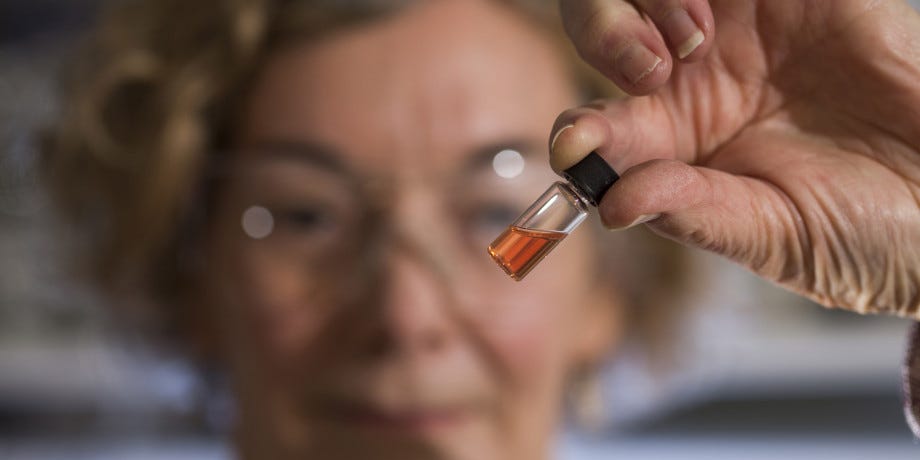
Scientists discovered the ancient pigment inside 1.1-billion-year-old marine rocks from the Taoudeni Basin in Mauritania, West Africa. The molecules were produced by microscopic photosynthetic organisms living in an ocean that disappeared hundreds of millions of years ago. When researchers extracted and diluted the pigments, they appeared bright pink. In concentrated form, they ranged from dark red to deep purple.
That does not necessarily mean Earth once resembled a giant strawberry milkshake. The discovery is more subtleand far more interesting. These pigments are molecular fossils that reveal which organisms dominated ancient seas and why complex life may have taken so long to emerge.
“`
What Does “Earth’s Oldest Color” Really Mean?
Calling bright pink the Earth’s oldest color is catchy, but the phrase needs a scientific footnote. Color, as a physical property of light, existed long before life. Minerals, stars, atmospheric gases, and molten rock have always absorbed and reflected different wavelengths.
The discovery concerns the oldest known intact biological pigments in the geological record. In other words, scientists found recognizable color-producing molecules that were once part of living organisms. These molecules survived inside sedimentary rock for approximately 1.1 billion years.
That age makes them more than half a billion years older than the previous record holders for preserved biological pigments. For comparison, dinosaurs did not appear until roughly 230 million years ago. The pink molecules were already ancient before the first dinosaur had even considered applying for the job.
Where Was the Bright Pink Pigment Found?
The story begins with marine black shale from the Taoudeni Basin, a vast geological basin extending across parts of West Africa. The samples came from Mauritania and had been collected from deep beneath the Sahara during petroleum exploration.
Although the region is now famous for sand, heat, and landscapes that look as if someone turned the saturation slider all the way down, it once contained an ancient marine environment. Fine particles and organic matter accumulated on the seafloor, eventually becoming layers of dark sedimentary rock.
The preservation conditions were unusually favorable. Organic material sank into seafloor sediments where oxygen was limited. That mattered because oxygen readily breaks down many biological molecules. Burial protected some of the chemical remains from complete destruction, while the surrounding rock avoided the extreme heat and pressure that could have erased them.
Preserving a pigment for 1.1 billion years therefore required an extraordinary chain of events: the organism had to live, die, sink, avoid being eaten, become buried in the right chemical environment, survive geological change, and eventually land in the hands of curious scientists. Even leftovers in the back of a refrigerator rarely demonstrate that level of commitment.
How Scientists Extracted a Billion-Year-Old Color
Researchers did not split open a rock and discover a glowing pink stripe. The process was closer to molecular detective work.
Crushing the Ancient Shale
The team first crushed the marine shale into a fine powder. Breaking the rock apart increased the surface area and made it possible to release tiny quantities of preserved organic material trapped within the mineral structure.
Using Solvents to Release Organic Molecules
Scientists then treated the powdered rock with organic solvents. Instead of producing the dark mixture they expected, the extraction developed an unmistakable reddish-pink color. When the pigment was concentrated, it appeared blood red or deep purple. Once diluted, it became bright pink.
Identifying Porphyrin Molecular Fossils
Advanced analytical instruments, including high-resolution mass spectrometry, allowed the researchers to separate and identify the colored compounds among tens of thousands of molecules in the extract.
The pigments were porphyrins, durable molecular structures derived from chlorophyll. Chlorophyll is the light-absorbing pigment that enables plants, algae, and cyanobacteria to perform photosynthesis. Its molecular architecture includes a large ring surrounding a magnesium atom. After an organism dies, chlorophyll can lose or alter some of its components while parts of the ring structure remain preserved as porphyrin derivatives.
These chemical remains are known as biomarkers or molecular fossils. Unlike a shell or bone, a molecular fossil may be invisible until laboratory instruments reveal it. Yet it can still provide valuable evidence about organisms that lived in a vanished ecosystem.
Why Did Ancient Chlorophyll Turn Pink?
Modern chlorophyll is strongly associated with green leaves, so a pink chlorophyll fossil sounds like a botanical identity crisis. The explanation lies in chemistry and concentration.
A living photosynthetic cell contains chlorophyll alongside numerous other pigments, membranes, proteins, and cellular structures. Once the organism dies, those components begin to break down. Over immense spans of geological time, chlorophyll is transformed into more stable porphyrin compounds with different light-absorbing properties.
The extracted molecules did not preserve the exact appearance of a living cell as though sealed in a microscopic snow globe. They preserved part of its chemical machinery. Concentrated porphyrins absorbed and reflected light in ways that made them look dark red or purple. Dilution produced the now-famous bright pink shade.
This is why headlines describing pink ancient life require a little caution. The molecules are genuinely colored, but the appearance of the laboratory extract is not a perfect photograph of the organisms or seawater as they looked 1.1 billion years ago.
Who Made the World’s Oldest Known Pigment?
The evidence points primarily toward cyanobacteria, microscopic organisms once commonly called blue-green algae. Despite that old nickname, cyanobacteria are bacteria rather than true algae.
Cyanobacteria perform oxygen-producing photosynthesis. They use sunlight to help convert carbon dioxide and water into energy-rich organic material, releasing oxygen as a byproduct. Their ancient activity helped transform Earth’s atmosphere and oceans, creating conditions that eventually supported oxygen-breathing organisms.
The “blue-green” label is also an oversimplification. Modern cyanobacteria contain chlorophyll a, but they may carry additional blue, red, yellow, or orange accessory pigments. Depending on the species and environment, cyanobacterial communities can look green, blue-green, brown, red, or nearly black. Nature has never shown much respect for tidy color charts.
Chemical analysis of the ancient porphyrins, including their nitrogen isotope signatures, indicated that bacterial primary producers dominated the ecosystem. The findings suggested that cyanobacteria were much more abundant than larger photosynthetic algae in the sampled ancient ocean.
A Glimpse of Earth 1.1 Billion Years Ago
The pigment dates to the Mesoproterozoic Era, part of the enormous span of time known as the Proterozoic Eon. Continents were arranged differently, oxygen levels were unlike those of the modern atmosphere, and almost all life was microscopic.
Animals had not yet filled the seas. There were no fish, coral reefs, flowering plants, birds, insects, or humans arguing about whether pink technically counts as a warm color. Microbial communities controlled many of the planet’s biological and chemical cycles.
Cyanobacteria had existed for far longer than the pigment-bearing rocks. Their fossil history extends deep into the Archean, and their photosynthetic activity played a major role in oxygenating the planet. They also built layered microbial structures known as stromatolites, some of the earliest widespread reef-like formations in Earth’s history.
The So-Called Boring Billion
The interval from roughly 1.8 billion to 800 million years ago is sometimes nicknamed the “Boring Billion.” The term does not mean nothing happened. Geologists are rarely that easily bored. It refers to a comparatively long period during which Earth’s climate, ocean chemistry, and biological evolution may have changed more slowly than during several dramatic intervals before and after it.
The bright pink pigment gives scientists a direct chemical clue about life during this poorly understood chapter. It suggests that many mid-Proterozoic oceans remained dominated by extremely small bacterial producers rather than large, nutrient-rich algae.
How Pink Pigments Help Explain the Rise of Animals
The discovery was important not simply because pink makes an excellent headline. It helped researchers investigate one of evolutionary history’s biggest questions: Why did complex animals appear so late?
Earth formed about 4.5 billion years ago, and microbial life arose very early. Yet abundant, complex animal ecosystems did not appear until much later, particularly during the late Proterozoic and the Cambrian Period.
Small Cells Created a Limited Food Supply
Cyanobacteria are extremely small. In an ecosystem dominated by tiny bacterial cells, energy moves through the food web differently than it does in an ocean rich in larger algae.
Large planktonic algae provide concentrated packages of nutrients that can be consumed by larger organisms. Tiny cyanobacteria are more difficult for many potential grazers to capture efficiently. Much of their organic matter may be recycled by other microorganisms before it reaches bigger consumers.
The study therefore supports the idea that cyanobacteria-dominated oceans created a nutritional bottleneck. Life was photosynthesizing and producing biomass, but the food web may not have transferred enough energy to support abundant large organisms.
The Expansion of Algae Changed the Menu
Later increases in the abundance and ecological importance of eukaryotic algae may have transformed marine food webs. Larger algal cells offered more accessible nutrients and energy, potentially helping support increasingly complex consumers.
Oxygen availability, nutrient cycles, climate, predation, genetics, and ecological interactions also influenced animal evolution. No single pink vial explains the entire history of complex life. Still, the pigment provides compelling evidence that the base of the marine food web was once very different from what it is today.
Was the Ancient Ocean Actually Pink?
It is tempting to picture a planet covered by rose-colored seas, but the evidence does not justify that conclusion. The extracted pigments appeared pink under laboratory conditions after being separated from rock and diluted in solvent.
The color of an actual ocean depends on water depth, dissolved materials, suspended particles, sunlight, the concentration of organisms, and how light scatters through the water. Even if cyanobacteria were abundant, their cells may not have colored the entire ocean bright pink.
Some localized microbial blooms or shallow environments could potentially have displayed reddish, purplish, greenish, or brownish tones, just as modern microbial communities create striking colors in lakes, salt ponds, and coastal waters. However, a global bubblegum-pink ocean remains an imaginative possibility rather than a demonstrated fact.
The most accurate statement is that scientists discovered the oldest known preserved biological pigments, and those extracted molecules were bright pink when diluted.
Why Ancient Biological Colors Matter
Fossil pigments add an unusually vivid dimension to paleontology. Conventional fossils preserve physical structures such as shells, bones, leaves, tracks, and cell shapes. Molecular fossils preserve fragments of biological chemistry.
These compounds can help scientists identify ancient photosynthetic organisms, reconstruct food webs, track changes in ocean chemistry, and estimate which groups dominated ecosystems that left few recognizable body fossils.
Ancient pigments also demonstrate the value of careful preservation. A plain piece of black shale may look unimpressive in a museum case, yet its molecular contents can reveal the colors, metabolisms, and ecological relationships of organisms separated from us by more than a billion years.
The discovery is also useful for astrobiology. Scientists searching for life beyond Earth may not find a convenient fossil shell waving politely from a Martian rock. Durable organic molecules and pigment-related chemical patterns could provide more realistic signs of ancient microbial activity.
Experiencing the Story of Earth’s Bright Pink Past
A billion years is difficult to imagine because the human mind was designed for birthdays, grocery lists, and remembering where it left the car keysnot for processing geological time. Turning this discovery into a hands-on experience can make its scale and scientific significance easier to understand.
Create a Deep-Time Walk
Imagine representing Earth’s 4.5-billion-year history with a 4.5-mile walk, assigning one billion years to each mile. The planet forms at the starting point. Evidence of early life appears after roughly the first mile. Oxygen-producing microorganisms spend much of the route quietly remodeling the atmosphere.
The bright pink pigments appear about 1.1 miles before the finish. Dinosaurs do not arrive until the final quarter-mile, and modern humans show up within the last few feet. Suddenly, a billion-year-old pink pigment no longer feels like an abstract number. It becomes a marker on an almost impossibly long road.
Try a Safe Color-and-Concentration Demonstration
A simple classroom experiment can illustrate why the same pigment may look different at different concentrations. Add a small amount of food coloring or beet juice to a clear glass of water. The concentrated liquid may appear dark red or purple. Transfer a few drops into another glass and dilute them further. The result becomes pink and eventually almost colorless.
This is not a chemical recreation of ancient porphyrins, but it provides a useful visual analogy. The color reported by an observer depends on concentration, lighting, background, and the other substances mixed with the pigment. It also explains why “the pigment is pink” does not automatically mean “the entire ocean was pink.”
Look Closely at an Ordinary Dark Rock
Visit a natural history museum, university collection, or geological display and examine a piece of shale. It may appear plain, layered, and dark. There are no dramatic teeth, claws, or fossilized facial expressions. Yet shale can preserve organic molecules that record ancient environments.
The experience encourages a different way of seeing rocks. Instead of asking only, “What shape is preserved?” ask, “What chemistry might remain?” A black stone may contain evidence of sunlight captured by organisms more than a billion years ago.
Compare Ancient Pigments With Modern Microbial Colors
Modern salt lakes, microbial mats, hot springs, and evaporation ponds can display intense red, orange, pink, green, or purple colors. These hues often come from communities of algae, archaea, and bacteria producing pigments that help them capture light or survive harsh conditions.
Viewing photographs of these environmentsor observing them responsibly in personoffers a glimpse of how microorganisms can alter the appearance of an ecosystem. The colors are not exact replicas of the Mesoproterozoic ocean, but they make a microbe-dominated world feel less alien.
Imagine Holding the Extract
The most powerful thought experiment may be the simplest. Picture a small laboratory vial filled with bright pink liquid. It looks fresh, almost playful, yet the pigment molecules originated in organisms that lived before animals had established complex ecosystems.
The vial connects two moments separated by 1.1 billion years: sunlight striking an ancient ocean and a scientist observing colored molecules in a modern laboratory. The original organisms were microscopic, but their chemical signatures endured through burial, continental change, erosion, drilling, crushing, extraction, and analysis.
That experience changes the meaning of color. Pink is no longer merely decorative. It becomes evidencea surviving chemical message from a planet whose continents, atmosphere, oceans, and inhabitants would be almost unrecognizable today.
Conclusion: Earth’s Pink Pigment Is a Window Into Deep Time
The Earth’s oldest known preserved biological color is bright pink, extracted from 1.1-billion-year-old marine shale beneath the Sahara. The pigment consists of porphyrin molecular fossils derived from chlorophyll produced by ancient photosynthetic organisms, most likely within an ecosystem dominated by cyanobacteria.
Its importance extends beyond the unexpected color. The discovery reveals a microbial ocean in which tiny bacterial producers greatly outnumbered larger algae. That ecosystem may have transferred energy inefficiently to larger organisms, helping explain why complex animal life took so long to flourish.
Scientists cannot conclude that every ancient sea looked like pink lemonade. What they can say is just as remarkable: part of the light-capturing chemistry of ancient life survived for more than a billion years. Sometimes Earth’s deepest history is not written in enormous bones or dramatic footprints. Sometimes it is hiding in black rock, waiting to turn a laboratory vial pink.

