
Makeup
A Garage Converted into a Period-Style Mews House in Bath, England
Jun
Some garages dream big. Others sit quietly behind roller shutters, collecting dust, paint cans, and the faint smell of “we’ll deal with that later.” In Bath, England, one humble garage did something far more dramatic: it became a period-style mews house with the soul of an old city and the cleverness of a tiny modern home.
This is not the usual garage conversion story where someone lays down vinyl flooring, adds a sofa, and declares victory over clutter. This project belongs to a more romantic category: a historic structure, once connected to everyday trade and later reduced to utilitarian storage, was reimagined as a compact dwelling that looks as though it has always belonged there. The magic lies in that phrase: “as though.” Great restoration is not costume drama. It is detective work, restraint, craftsmanship, and occasionally, the ability to look at a tired building and say, “You, my dusty friend, still have excellent bone structure.”
Bath is the perfect setting for such a transformation. Famous for Roman remains, honey-colored Bath stone, Georgian architecture, elegant streets, and a rare whole-city World Heritage identity, Bath does not casually tolerate design nonsense. A new or altered building in this city must be polite to its neighbors, respectful of history, and handsome enough not to make the Royal Crescent raise an eyebrow.
From Garage to Period-Style Mews House
The featured Bath conversion began with a building that had lived several lives. It had historic roots, had functioned in commercial ways, and in more recent decades had become a garage. Like many urban service structures, it was practical rather than glamorous. Behind the modern garage front were the familiar ingredients of neglect: hard surfaces, limited comfort, awkward proportions, and not much evidence of domestic charm.
Yet the building still carried clues. Old matchboarding, evidence of earlier openings, and historic references from nearby façades suggested that this was not simply a blank shell. A period-style mews house was hiding in plain sight. The renovation’s strongest idea was not to erase the building’s past, but to interpret it. That is a major lesson for anyone planning a garage conversion in a historic area: the building may already be telling you what it wants to become. You just have to stop shouting “open concept!” long enough to listen.
A mews house traditionally refers to a small dwelling connected to former stables, carriage houses, or service lanes behind larger homes. In modern design language, “mews house” has come to mean a compact urban residence with character, intimacy, and a tucked-away quality. It is not necessarily grand, but it is often memorable. In Bath, where scale and rhythm matter, that modesty becomes an advantage.
Why Bath Makes This Conversion Special
Bath is not a neutral backdrop. It is one of those cities where architecture is part of the atmosphere, like weather or gossip. The warm limestone, sash windows, fanlights, shopfronts, railings, and carefully proportioned streets create a visual grammar. Any renovation that ignores that grammar risks sounding like a kazoo solo in a string quartet.
The Bath garage conversion works because it treats context as a design partner. Instead of forcing a slick, anonymous interior into an old shell, the project uses period cues: traditional joinery, salvaged materials, darker painted wood, practical built-ins, and a shopfront-like treatment that brings light inside while preserving privacy. The result feels layered rather than staged.
That balance is important. “Period-style” does not mean pretending the house has never heard of electricity, insulation, indoor plumbing, or Wi-Fi. Nobody wants to live in a museum where the radiator is shy and the kitchen refuses to acknowledge the dishwasher. A successful period-style conversion lets modern systems do their work quietly, while visible details carry the historic mood.
The Power of Salvaged Materials
One of the most compelling aspects of this type of renovation is the use of reclaimed and salvaged materials. Salvage gives small spaces instant depth. A new board can look clean, but an old board has stories. It may have dents, nail marks, color variation, and the sort of personality that cannot be ordered with two-day shipping.
In a garage converted into a mews house, reclaimed timber can serve multiple roles. It can become flooring, wall paneling, shelving, cupboard fronts, or even a visual bridge between old structure and new use. Salvaged doors, old ironmongery, antique lighting, and repurposed paneling help the interior avoid the dreaded “renovation showroom” effect. That matters especially in a compact home, where every surface is close enough to be judged.
Small homes are unforgiving. If the materials are bland, the entire space feels bland. If the materials are rich, textured, and thoughtfully used, the home feels intentional. In this Bath project, the design language suggests that imperfection can be a luxury. A scratch, a patina, a slightly uneven surface: these are not flaws when handled well. They are architectural seasoning.
Light, Privacy, and the Shopfront Trick
Converting a garage into a home often begins with one big problem: garages are not designed for pleasant living. They are designed for cars, bicycles, bins, tools, and sometimes that mysterious box labeled “misc.” Natural light is usually limited, privacy can be awkward, and the original door opening may be too large, too exposed, or too ugly to survive civilized conversation.
The Bath mews house solves this with a period-inspired frontage that recalls an old shopfront. This is a clever move because it respects the building’s commercial past while solving practical problems. Frosted or partially obscured glass can pull daylight into the room without turning daily life into street theater. Traditional joinery adds rhythm and detail. The façade becomes neither a fake cottage face nor a modern glass wall, but something more nuanced: a believable urban threshold.
For homeowners planning a similar garage conversion, this is a valuable principle. Do not simply “fill in” the garage door. Reimagine the opening. Could it become a window wall with divided panes? A courtyard-facing set of doors? A recessed entrance with storage? A façade that borrows proportions from nearby buildings? The old garage opening is not a problem to hide; it is the design opportunity waving both arms.
Designing a Small Kitchen That Works Hard
In a compact mews house, the kitchen cannot sprawl. It must behave. Every inch needs a job, and preferably two jobs, because small-space design rewards multitasking. Open shelving can keep the room feeling lighter, but too much open storage turns daily life into a public inventory of mugs. Closed cupboards hide the chaos. Drawers improve access. Hooks, rails, and narrow shelves can make vertical space useful without crowding the room.
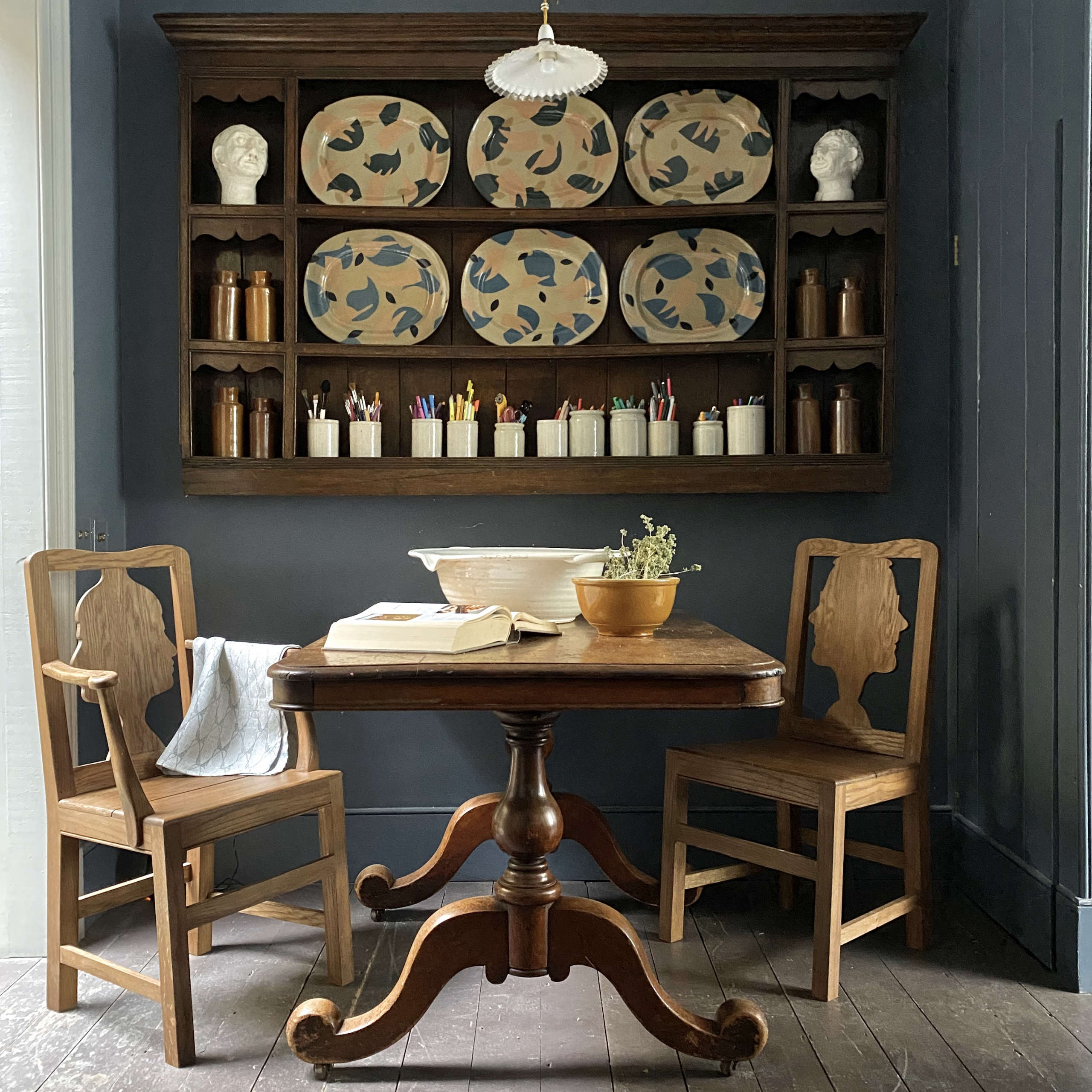
The best small kitchens combine efficiency with atmosphere. In a period-style Bath conversion, that might mean painted cabinetry, aged brass hardware, a traditional sink, timber counters, stone or tile surfaces, and freestanding pieces that feel collected rather than installed by a committee of catalog pages. A dining nook or small table can soften the kitchen and make it feel like the heart of the home, not a kitchenette apologizing for its existence.
Color matters, too. Dark, earthy paint can make a small room feel enveloping rather than cramped. Light colors can brighten a space, but they are not the only answer. In historic interiors, deep browns, greens, oxbloods, creams, and stone-like neutrals can create warmth and depth. The key is balance: dark surfaces need light, reflection, and texture so they feel cozy, not cave-like.
Comfort Behind the Character
A beautiful garage conversion still has to pass the boring tests: insulation, ventilation, moisture control, heating, plumbing, electrical service, safe stairs, proper floors, and local permissions. These items are not glamorous, but neither is discovering that your charming new sitting room has the thermal performance of a biscuit tin.
Garages often have concrete slabs that are cold, uneven, or lower than the rest of the property. They may require new floor buildup, damp protection, insulation, and careful detailing at thresholds. Walls and roofs may need upgrades to meet residential comfort standards. In older buildings, breathable materials and conservation-sensitive methods may be more appropriate than aggressive modern fixes.
This is where historic renovations become a grown-up sport. The most successful projects bring together design ambition and technical caution. A good team studies the structure before prescribing solutions. It checks what can be retained, what must be replaced, and what should be upgraded invisibly. The goal is not to make an old building behave exactly like a new one. The goal is to make it safe, comfortable, durable, and still recognizably itself.
Period-Style Without Pastiche
There is a thin line between period style and theatrical fakery. Cross it, and suddenly the house looks less like a sensitive restoration and more like a theme restaurant called Ye Olde Mortgage Payment. The Bath garage conversion avoids that trap by emphasizing proportion, materials, and craft rather than decorative overload.
Period-style design is strongest when it asks: What would be plausible here? What details belong to this building type, this street, this city? A modest mews house does not need ballroom chandeliers, gilded mirrors, or a staircase that expects applause. It needs honest joinery, good windows, durable floors, well-scaled lighting, and furniture that fits the room without blocking every human movement.
That humility gives the house charm. The building does not need to become grand. It needs to become whole. In many ways, that is harder. Grand gestures are easy to photograph. Quiet coherence is harder to fake.
Lessons for Anyone Planning a Garage Conversion
1. Research Before You Rip Out
Before demolition begins, study the building. Look for old photos, maps, paint layers, blocked openings, former uses, and construction clues. In a historic setting, those details can guide the design and prevent expensive mistakes. Sometimes the most valuable feature is hiding behind the least attractive modern addition.
2. Let the Exterior Speak to the Street
A converted garage should not look like a garage wearing a fake mustache. The street-facing elevation deserves careful design. Windows, doors, materials, and proportions should respond to the surrounding architecture. In Bath, that means sensitivity to stone, sash-window rhythms, shopfront heritage, and the city’s restrained elegance.
3. Invest in the Invisible Work
Insulation, damp control, structure, ventilation, and services are the backbone of a good conversion. Skimp here and the prettiest reclaimed floorboards in the world will not save you. Comfort is not the enemy of character; it is what allows character to be enjoyed without wearing three sweaters indoors.
4. Use Storage as Architecture
Small homes need storage that feels built into the design. Benches, under-stair cupboards, wall shelves, concealed pantries, appliance garages, and full-height cabinets can preserve calm. The goal is not minimalism for its own sake. The goal is giving every object a place to go so the house does not look ambushed by daily life.
5. Choose Materials With Memory
Reclaimed wood, antique hardware, handmade tile, natural stone, lime plaster, and traditional paint finishes can bring depth to a compact home. But restraint matters. Use old materials where they support the story, not everywhere at once. A small room can digest only so much character before it needs a nap.
Why This Bath Mews House Feels So Appealing
The appeal of this garage-to-mews conversion is not only that it is attractive. It is that it feels intelligent. It recognizes that old buildings are not obstacles to creativity; they are invitations. The project turns limitation into atmosphere: a small footprint becomes intimacy, a former garage opening becomes a crafted façade, and salvaged material becomes continuity.
It also reflects a broader design shift. Homeowners increasingly want spaces with story, not just square footage. A compact home in a historic city can offer something a large new-build often struggles to achieve: a sense of place. This mews house could not be anywhere. It belongs to Bath, to its lanes, to its material culture, and to the long tradition of buildings changing use while keeping their dignity.
That is the best kind of adaptive reuse. It is sustainable not only because it reuses an existing structure and salvaged materials, but because it preserves meaning. It keeps a small piece of urban fabric alive. It proves that even a garage can become a graceful home when design looks backward and forward at the same time.
Experience Notes: What This Kind of Home Teaches You
Living in or visiting a converted mews house is a different experience from walking into a conventional home. The first sensation is usually compression. The rooms are smaller, the entry is more direct, and the building does not waste much space on ceremony. There may be no grand hallway where one can dramatically remove gloves like a period-drama duchess. Instead, you step straight into usefulness: kitchen, table, hearth-like warmth, stairs, shelves, and light borrowed wherever it can be found.
That compactness changes the way people behave. You become more aware of what you own. A giant sectional sofa is no longer a furniture choice; it is a hostile takeover. Every chair must earn its keep. Every lamp has to flatter the room and do actual work. Storage becomes less of a background issue and more like a quiet roommate. If it is well designed, life feels calm. If it is not, one pair of boots and a tote bag can make the place look like it lost a bar fight.
The pleasure, however, is enormous. A period-style mews house offers daily contact with texture. You notice the grain of the boards, the weight of the door latch, the way light diffuses through glass, the small irregularities in old walls, and the warmth of paint colors that would feel too bold in a larger modern house. Instead of feeling incomplete, the small scale can feel concentrated, like espresso architecture.
Bath adds another layer to that experience. Step outside and the city continues the story. The stone streets, historic façades, crescents, shopfronts, and lanes create a sense that the house is not an isolated object but part of a much larger composition. A good mews conversion respects that. It does not shout for attention. It joins the chorus, preferably in tune.
There is also a practical lesson: old buildings reward patience. A garage conversion in a historic shell rarely unfolds like a tidy television montage. There are discoveries, delays, surprises, and moments when a wall reveals something inconvenient enough to make everyone stare silently at it. But those surprises can also be gifts. A blocked opening might inspire a new window. Old boards might become paneling. A forgotten photograph might guide the façade. The project becomes richer because it was not entirely predictable.
The deepest experience is emotional. A converted garage reminds us that buildings are not fixed forever. They adapt. They survive neglect, awkward alterations, changing needs, and occasionally terrible garage doors. With care, they can become useful again without losing their past. That is why this Bath mews house resonates: it is not merely a renovation. It is a rescue mission with good lighting, better joinery, and far more charm than any former garage has a right to possess.
Conclusion
A garage converted into a period-style mews house in Bath, England, is more than a clever small-space makeover. It is a case study in adaptive reuse, heritage sensitivity, and design discipline. The project shows how an overlooked structure can become a home with warmth, function, and historical confidence when the renovation team respects context, studies the building’s past, and chooses materials with character.
For anyone dreaming of a garage conversion, the lesson is clear: do not begin with square footage alone. Begin with story. Ask what the building was, what it can become, and how modern comfort can be woven in without flattening its personality. Done well, a converted garage can become something far better than extra space. It can become the most interesting room, guesthouse, studio, or tiny home on the property.
Note: This article is original editorial content written for web publication. It is based on real architectural, renovation, preservation, and small-space design information, rewritten in a natural style without copied source text.

