
Skincare
Ten Tales of Ghost Hauntings in U.S. National Parks
Jun
America’s national parks are famous for red-rock canyons, old-growth forests, steaming geysers, misty mountains, and scenic overlooks that make everyone suddenly believe they are a professional photographer. But after sunset, another side of the park system comes out. The trails get quieter. Historic hotels creak. Old battlefields settle under moonlight. A cave tour suddenly feels much longer than the brochure promised.
That is where the ghost stories begin.
Some of these tales come from official ranger programs, local folklore, oral history, historic tragedies, or generations of visitors swapping campfire stories. Others are legends attached to national park lodges, abandoned mining towns, Civil War landscapes, and preserved communities that feel as if the past stepped out for five minutes and forgot to lock the door behind it.
This article explores ten ghost hauntings in U.S. national parks and National Park Service sites. The goal is not to prove that ghosts are checking into park lodges without reservations. Instead, it is to show how haunted national parks use folklore to keep history alive, make visitors curious, and remind us that landscapes are never just scenery. They are memory with trees, rocks, weather, and occasionally a suspicious hallway noise.
Why Ghost Stories Follow America’s National Parks
National parks protect more than mountains and wildlife. They preserve battlefields, prisons, caves, cemeteries, mining towns, old hotels, Indigenous cultural landscapes, and communities that existed long before a park boundary appeared on a map. That means the park system is full of places where joy, hardship, courage, loss, migration, ambition, and disaster all left marks.
Ghost stories thrive in those places because they give emotion a shape. A battlefield becomes more than troop movements. A prison becomes more than walls. A cave becomes more than geology. The best haunted park tales are not only spooky; they are historical flashlights. They point toward something real: a person, a building, a community, a dangerous job, or a moment that people still want to understand.
1. Grand Canyon National Park: The Wailing Woman of the Rim
Grand Canyon National Park is already dramatic enough to make your camera roll nervous. Add fog, wind, and a lonely trail at dusk, and it becomes the perfect stage for one of the most famous haunted national park legends: the Wailing Woman.
According to park folklore, visitors near the canyon rim have reported hearing the cries of a woman, especially around quiet paths and older lodge areas. Some versions describe a figure in pale clothing moving along the edge, as if searching for someone who never returned. The tale is often connected to grief, loss, and the dangerous beauty of the canyon itself.
What makes this story powerful is not jump-scare horror. It is the setting. The Grand Canyon is vast enough to make human concerns feel tiny, yet personal enough to make a single voice echo in the imagination. Wind in the pines, shifting shadows, and the canyon’s immense silence can turn an ordinary evening walk into a scene that feels borrowed from a gothic novel with better geology.
Whether the Wailing Woman is a spirit, a legend, or the canyon’s natural acoustics playing tricks, the story captures a truth every visitor understands: this landscape is beautiful, but it is not casual. The canyon asks for respect.
2. Yosemite National Park: The Friendly Ghosts of the Ahwahnee
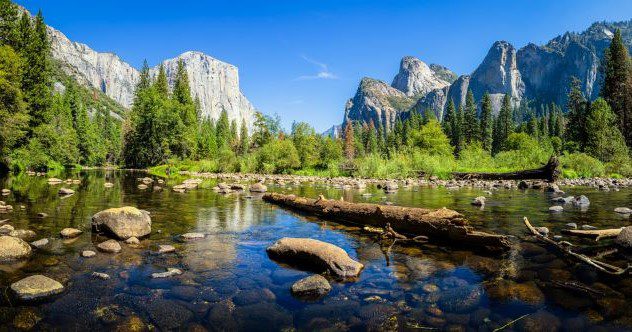
Yosemite National Park has granite cliffs, waterfalls, giant trees, and one very famous historic hotel with a reputation for being charmingly haunted. The Ahwahnee, opened in 1927, is known for its grand architecture, elegant interiors, and the kind of atmosphere that makes guests speak in quieter voices even when they are just asking where breakfast is.
Over the years, former guests and employees have shared stories of gentle, unexplained activity inside the hotel. One popular legend tells of a woman’s spirit who seems less interested in terrifying visitors than in tucking them into bed. That is not exactly horror; that is ghostly hospitality. If true, it may be the only haunting in America that comes with turndown service.
The Ahwahnee’s haunted reputation is also tied to its long history as a gathering place for travelers, artists, presidents, winter events, and Yosemite dreamers. Big hotels collect stories the way old coats collect pine needles. Every hallway has footsteps. Every fireplace has overheard conversations. Every polished beam seems to remember someone.
The ghost tales work because Yosemite itself feels timeless. The cliffs outside have watched centuries pass. A hotel inside that landscape does not need chains rattling in the attic to feel mysterious. A creak at midnight will do just fine.
3. Mammoth Cave National Park: Shadows Below Kentucky
Mammoth Cave National Park protects the world’s longest known cave system, and if any place deserves a ghost story, it is a huge underground maze where darkness is not a mood but a full-time employee. The park’s human history stretches across thousands of years, including Indigenous exploration, saltpeter mining, tourism, enslaved cave guides, and a 19th-century tuberculosis experiment.
One of the most frequently mentioned figures in Mammoth Cave lore is Stephen Bishop, an enslaved man and brilliant early cave guide who mapped and explored parts of the system in the 1800s. Stories sometimes describe visitors or guides sensing a presence in the cave, seeing figures in the distance, or hearing sounds that seem to travel from nowhere.
The cave environment makes these tales especially persuasive. Sound behaves strangely underground. A footstep can bounce. A whisper can wander. A lantern beam can catch stone in a way that looks almost human. Your rational brain may say, “That is limestone.” Your nervous system may reply, “Excellent point, but we are leaving now.”
Mammoth Cave’s hauntings endure because they are tied to real history. The underground world was a workplace, a medical hope, a tourist attraction, and a place of danger. In the dark, the past does not feel gone. It feels just around the bend.
4. Gettysburg National Military Park: Devil’s Den and the Battlefield Spirits
Few National Park Service sites are more associated with ghosts than Gettysburg National Military Park. The Battle of Gettysburg in July 1863 was one of the defining and deadliest battles of the Civil War, and the landscape still carries the emotional weight of that history.
Devil’s Den, a boulder-strewn area near Little Round Top, is especially famous among ghost-story fans. Visitors have reported strange camera malfunctions, unexplained figures, sudden cold spots, and the eerie feeling of being watched among the rocks. Some legends describe soldiers appearing briefly before vanishing, as if the battlefield has replayed one frame of history and then stopped.
The setting makes the stories easy to understand. Devil’s Den is visually striking even in daylight. The rocks create hiding places, narrow passages, and dramatic shadows. At twilight, the area can feel like a stage set for memory, not monsters.
Gettysburg ghost stories should be handled with respect. The battlefield is not a haunted attraction in the cheap sense. It is a preserved place of national grief, courage, confusion, and consequence. The ghost tales matter because they show how strongly people still feel the presence of history there. In Gettysburg, the past does not whisper for attention. It already has it.
5. Yellowstone National Park: The Old Faithful Inn Bride
Yellowstone National Park has geysers, boiling pools, bison traffic jams, and one of the most famous lodge ghost stories in the park world: the bride of Old Faithful Inn. The inn, completed in the early 1900s, is a masterpiece of rustic architecture, full of massive logs, high balconies, and enough atmosphere to make a ghost feel underdressed.
Folklore tells of a young bride whose troubled honeymoon ended at the inn. In the legend, her spirit is sometimes seen near the upper levels or staircase, still wandering the building. Different versions of the story vary, as folklore tends to do after being passed around more often than trail mix.
The Old Faithful Inn is an ideal ghost-story setting because it already feels larger than life. The lobby rises like a wooden cathedral. The geyser basin outside steams and hisses. At night, the building’s shadows stretch across balconies and railings. Even completely normal noises can sound like someone crossing a floor above you, which is exciting until you remember you are on the top floor.
Whether the bride is a genuine apparition or a classic hotel legend, the tale adds another layer to Yellowstone’s personality. The park is not just wild outdoors; it is also old buildings, human drama, and stories told by the fireplace while geothermal steam curls outside like special effects.
6. Great Smoky Mountains National Park: Lucy of Roaring Fork
Great Smoky Mountains National Park is rich with Appalachian history, preserved cabins, old cemeteries, winding roads, and mountain communities whose stories did not disappear when the land became a park. One of the best-known local ghost tales is Lucy of Roaring Fork.
Roaring Fork Motor Nature Trail is a narrow scenic loop near Gatlinburg, Tennessee, where visitors pass rushing streams, forest, historic cabins, and remnants of mountain life. The Lucy legend tells of a young woman seen along the road, sometimes asking for help or a ride. In many versions, a kind traveler later learns that the woman he met could not have been living at the time of the encounter.
It is a classic roadside ghost story, but the Smokies give it special texture. The mountains are layered with mist, memory, and family history. The park also contains more than 150 cemeteries, many connected to communities that once lived inside what is now protected land. That makes the landscape feel personal rather than empty.
Lucy’s story works because it is not about horror. It is about loneliness, kindness, and the feeling that some roads remember the people who once walked them. Also, it gives drivers one more reason not to speed on a narrow mountain road. Ghost or no ghost, that advice is solid.
7. Alcatraz Island: Voices Inside “The Rock”
Alcatraz Island, part of Golden Gate National Recreation Area, is one of the most famous former prisons in the United States. Before becoming a National Park Service site, the island served as a fort, a military prison, and a federal penitentiary. Its nickname, “The Rock,” is not exactly cheerful. Nobody hears “The Rock” and thinks, “What a cozy weekend retreat.”
Alcatraz ghost stories often center on the cellhouse, isolation cells, old corridors, and reports of unexplained sounds. Visitors and paranormal storytellers have described hearing voices, footsteps, clanging, or sudden coldness in places associated with confinement. Cell 14D is often mentioned in haunted Alcatraz lore as one of the island’s most unsettling locations.
The power of Alcatraz comes from its real history. The prison held some of the country’s most notorious inmates, but the deeper story is about punishment, isolation, justice, and the human cost of incarceration. The island’s buildings are stark, exposed to wind, and surrounded by cold water. Even in broad daylight, the atmosphere feels heavy.
Are the sounds ghosts, building acoustics, ocean wind, or imagination? Maybe a little of everything. Alcatraz does not need to prove itself haunted to feel haunted. The place is already full of echoes.
8. Death Valley National Park: Skidoo and the Ghost Town That Refuses to Be Quiet
Death Valley National Park is home to extreme heat, vast desert views, old mining routes, and ghost towns that look as if the boom years simply evaporated. One of the most memorable is Skidoo, a former gold-mining town in the Panamint Mountains.
Skidoo began during the early 20th-century mining rush and became known for its engineering, including a remarkable water-powered stamp mill. The town rose quickly and faded when the mining economy declined. Today, little remains compared with its busy years, but ghost towns do not need many buildings to feel alive in the wrong way. A foundation, a mine road, and a name can do plenty.
Skidoo’s lore includes grim frontier stories, rough justice, and tales of restless energy around the old townsite. Like many Western ghost towns, its hauntings are less about a single floating figure and more about atmosphere. The desert is quiet enough to make every sound suspicious. Wind moves through open space. Old roads lead nowhere. A visitor can stand in the remains of a once-busy settlement and feel how quickly ambition can turn into dust.
Death Valley’s ghost-town stories are valuable because they connect adventure tourism with labor history. These were not movie sets. They were workplaces built by people chasing opportunity in a brutal landscape. The ghosts of Skidoo, real or symbolic, are the echoes of boomtown dreams.
9. Cumberland Gap National Historical Park: The Officer in Gap Cave
Cumberland Gap National Historical Park sits where Kentucky, Tennessee, and Virginia meet, preserving a major corridor of migration, conflict, and mountain history. Among its haunted tales is the legend of Gap Cave, once known by another historic name and now associated with reports of a ghostly Civil War officer.
According to park-related storytelling, the figure has been described near a stairway inside the cave. Rangers have even joked about the demanding climb in that area, which proves that even in haunted places, National Park Service humor remains wonderfully practical.
A cave ghost story has an unfair advantage. The setting does half the work. Underground spaces compress sound, erase daylight, and make time feel strange. Add Civil War history and the mountain pass’s role as a gateway through the Appalachians, and the legend gains emotional weight.
The officer tale is a reminder that Cumberland Gap is not just a scenic overlook. It is a crossroads where many American stories passed through: Indigenous history, westward migration, military movement, settlement, hardship, and change. If a place could collect footsteps, Cumberland Gap would need extra storage.
10. New River Gorge National Park and Preserve: Appalachian Legends After Dark
New River Gorge National Park and Preserve in West Virginia is one of the newer national parks by designation, but its history is anything but new. The gorge includes old railroad towns, coal-mining heritage, rugged trails, river stories, and Appalachian folklore that seems made for night hikes.
Ranger-led haunted history programs in the area have highlighted local legends and ghost stories along dark trails. These programs show how supernatural storytelling can become a doorway into real history. A “haunted” hike may begin with goosebumps, but it often ends with visitors learning about communities, industries, disasters, and people whose lives shaped the gorge.
The region’s abandoned and historic places are especially effective at stirring the imagination. Old rail lines, empty structures, and forested paths can make the past feel close. The gorge is dramatic in daylight; after dark, it becomes a natural amphitheater for every creak, owl call, and twig snap within three counties.
New River Gorge’s ghost stories are not just spooky entertainment. They are part of Appalachian oral tradition, where storytelling keeps local identity alive. The ghosts may or may not appear, but the stories definitely do.
What These Haunted National Park Tales Have in Common
At first, these ten tales seem wildly different. A hotel bride in Yellowstone has little in common with a cave figure in Kentucky or a battlefield apparition in Pennsylvania. But look closer and the pattern appears.
Each haunting is tied to a place where history feels unfinished. Grand Canyon’s legend is about grief and danger. Yosemite’s is about hospitality and memory. Mammoth Cave’s is about darkness, labor, and exploration. Gettysburg’s is about national trauma. Alcatraz’s is about isolation. Death Valley’s is about vanished ambition. The Smokies’ Lucy story is about mountain roads and human kindness. Cumberland Gap and New River Gorge preserve older routes, communities, and stories that still shape regional identity.
That is why ghost stories work so well in national parks. They help visitors feel that history was lived by real people, not stored in a display case. A ghost tale can do what a sign sometimes cannot: make someone stop, listen, and imagine.
How to Enjoy Haunted National Parks Respectfully
Haunted tourism can be fun, but national parks are protected places, not escape rooms with better parking. Visitors should stay on marked trails, follow posted rules, respect closed buildings, and avoid disturbing cemeteries, ruins, wildlife, or cultural sites. A spooky story is not permission to climb through a restricted structure while whispering, “I’m doing research.” You are not. You are trespassing with dramatic lighting.
It is also important to remember that many haunted places are connected to real loss. Battlefields, prisons, mining sites, and cemeteries deserve care. The best ghost-story travelers bring curiosity and respect in equal amounts.
Experience Notes: Traveling Through Haunted National Parks
If you want to experience the mood behind these haunted national park stories, the secret is not to chase ghosts. The secret is to slow down. Many visitors rush from overlook to overlook, collecting photos as if the park might expire by lunchtime. Haunted places reward a different pace.
Arrive early or stay close to sunset, when allowed and safe. Listen to the way a historic hotel settles after the dinner crowd disappears. Walk a battlefield trail with enough time to read the markers instead of treating them like decorative lawn signs. Take a ranger program if one is offered, because rangers are often the best storytellers in the park system. They know how to balance folklore with facts, and they usually have excellent delivery. A good ranger can make a lantern, a trail, and a local legend feel like premium theater without charging Broadway prices.
For cave sites such as Mammoth Cave or Gap Cave, book official tours and follow the guide’s instructions. Caves are fragile environments, and they are also very good at reminding humans that our night vision is terrible. Bring a light jacket, wear proper shoes, and prepare for your imagination to become unusually active. Every drip of water will sound like a clue. It probably is not a clue, but your brain will hold a meeting about it anyway.
For places like Great Smoky Mountains, Death Valley, and New River Gorge, pay attention to landscape history. A preserved cabin, a cemetery, a rail grade, or an abandoned mining area can tell you more than a dramatic ghost tour ever could. Ask: Who lived here? What work did they do? Why did they leave? What did the park preserve, and what disappeared before preservation began? Those questions turn a spooky stop into a meaningful visit.
Photography can also deepen the experience, but not because every blurry image is a spirit named Harold. Take photos of textures: old wood, empty windows, trail signs, stone walls, fog, rail tracks, hotel balconies, and desert foundations. These details capture why haunted national parks feel haunted in the first place. They show age, silence, distance, and memory.
Finally, travel with a sense of humor. Ghost stories are best when they leave room for wonder, skepticism, and the possibility that the terrifying noise outside your tent is just a raccoon with the confidence of a small landlord. Let yourself enjoy the mystery without needing to solve it completely. National parks are places where science, history, beauty, and folklore can share the same trail. That mix is exactly what makes them unforgettable.
Conclusion: The Parks Remember
The ten tales of ghost hauntings in U.S. national parks are more than spooky seasonal entertainment. They are stories about how Americans relate to protected places. We visit national parks for scenery, but we return because they make us feel connected to something larger than ourselves.
Ghost stories are one way that connection speaks. They remind us that every overlook, cave passage, hotel corridor, battlefield, prison cell, and mountain road has a human dimension. Some stories are sad. Some are strange. Some are probably the result of wind, darkness, and an overactive imagination that had too much camp coffee. But all of them invite visitors to look more closely.
So the next time you stand in a national park after sunset and hear a sound you cannot immediately explain, do not panic. It may be a branch. It may be a building settling. It may be history asking politely for your attention. Either way, keep your flashlight handy.

