
Skincare
16 Most Expensive Pez Dispensers That Are Worth a Fortune!
Jun
Some collectibles whisper, “I am historically important.” A rare PEZ dispenser kicks open the toy chest and yells, “I used to cost pocket change, and now I might pay your rent.” That is the peculiar magic of vintage PEZ dispensers: tiny plastic candy machines that began as novelty items, survived decades of toy boxes, and now command serious money among collectors.
The most expensive PEZ dispensers are not valuable because they are made of gold. Most are humble plastic. Their power comes from rarity, condition, prototype status, old production quirks, discontinued lines, celebrity or political history, and the kind of collector demand that makes grown adults examine stem markings like ancient runes.
Before we pop the top on the list, one important note: PEZ prices can vary wildly. A rare dispenser with its original card, clean stem, correct head, intact parts, and verified provenance can be worth thousands. A similar-looking piece with missing accessories, damaged plastic, or suspicious repairs may be worth far less. In the PEZ world, one tiny missing face piece can turn “small fortune” into “nice conversation starter.”
Why Are Rare PEZ Dispensers So Valuable?
PEZ began in Austria as a peppermint candy, and the company’s U.S. story took off after dispensers shifted from plain “regulars” to character-topped toys. Over the years, PEZ released hundreds of designs and countless variations. That is where collectors get excited. Different stems, no-foot bases, patent numbers, country marks, colors, stickers, soft heads, promotional runs, and prototypes can all affect value.
Collectors especially chase dispensers that were never sold widely, were made for special events, were pulled from production, or were created as employee gifts. The rarest examples are almost like candy-world fossils. They tell a story about manufacturing, marketing, pop culture, and sometimes even presidential history. Yes, there are PEZ dispensers connected to John F. Kennedy. Your childhood candy just entered the history classroom wearing a plastic grin.
16 Most Expensive PEZ Dispensers
1. Political Donkey PEZ Dispenser
Estimated value: $12,000 to $15,000 or more
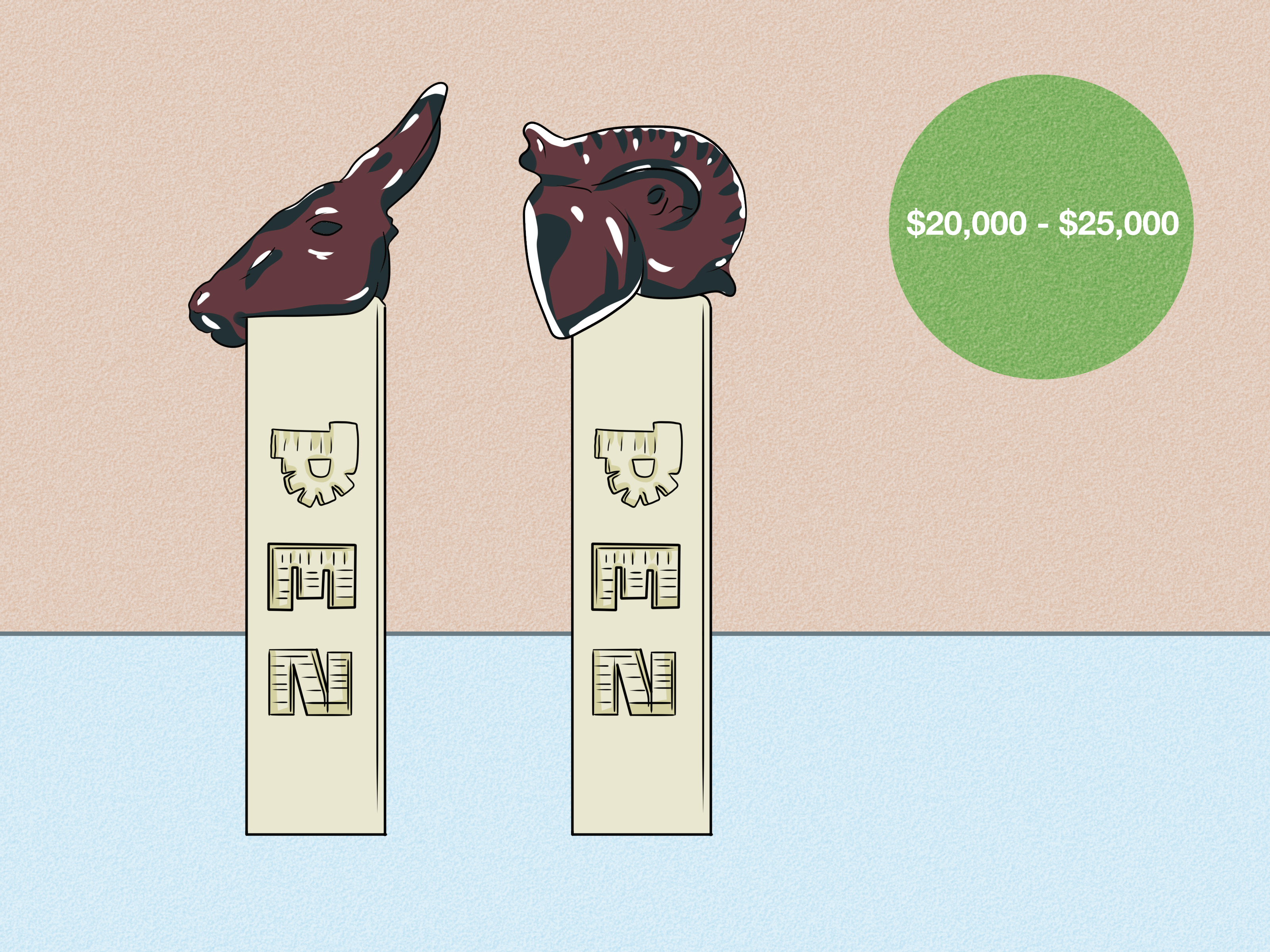
The Political Donkey is often called the holy grail of PEZ collecting. Introduced in 1961, this rare dispenser is tied to a special political set created during the Kennedy era. One Democratic donkey dispenser was reportedly connected to President John F. Kennedy’s visit to Austria, making it more than a toy; it is a tiny, candy-dispensing piece of political memorabilia.
Only a few examples are known, and the official PEZ archive describes the Political Donkey as extremely rare. That kind of scarcity is rocket fuel for collector value. When a New York man discovered one while helping clean out his grandfather’s belongings, it drew major attention and was expected to sell in the five-figure range. Not bad for something that looks like it could have been hiding in a junk drawer next to rubber bands and old keys.
2. Prince William and Catherine Royal Wedding PEZ Pair
Reported auction price: about $13,360
In 2011, PEZ created a one-of-a-kind dispenser pair to celebrate the wedding of Prince William and Catherine Middleton. The set was auctioned for charity and reportedly sold for more than $13,000, making it one of the highest public PEZ sales ever recorded.
What makes this pair different from most vintage collectibles is that it is not old in the classic attic-treasure sense. Its value comes from being unique, tied to a globally watched royal event, and sold through a charity auction. In other words, it is less “forgotten toy box” and more “plastic royal portrait with a noble fundraising mission.”
3. 1982 World’s Fair Astronaut B PEZ
Estimated value: often cited around $10,000 to $12,000; disputed auction story reached $32,205
The Astronaut B is one of the most famous rare PEZ dispensers because of its dramatic auction history. A 1982 World’s Fair version was once reported to have reached $32,205 in an online auction, although collector sources have debated whether the sale fully completed. Even with that controversy, the Astronaut B remains a legendary prototype-style dispenser.
Its appeal is easy to understand. Space themes are always collectible, World’s Fair items have built-in nostalgia, and the limited number of known examples makes it a PEZ superstar. The misspelling of “Tennessee” on some references only adds to the oddball charm. Apparently, even expensive candy dispensers can have typo energy.
4. Political Elephant PEZ Dispenser
Estimated value: $10,000 or more
The Political Elephant is the Republican companion to the famous Political Donkey. Like the donkey, it was created in 1961 and is considered one of the rarest PEZ dispensers ever produced. Some reports suggest only a small number of Political Elephant examples are known.
Collectors love pairs and sets, which gives the Political Elephant extra weight. A donkey alone is rare; a donkey and elephant together create a political PEZ power couple. It is the kind of item that attracts not only PEZ collectors but also collectors of presidential and political memorabilia.
5. Prince Harry and Meghan Markle PEZ Pair
Reported auction price: about $9,866
PEZ returned to royal-wedding fever in 2018 with a one-of-a-kind Prince Harry and Meghan Markle dispenser pair. The set was auctioned for charity, with proceeds supporting Make-A-Wish. Like the William and Catherine pair, this collectible earns its value through uniqueness, celebrity connection, and public auction history.
Not every PEZ collector ranks modern charity pairs above vintage prototypes, but public sales matter. When bidders compete for a one-off royal set, the final price becomes part of PEZ collecting history. Also, let’s be honest: a royal PEZ pair is exactly the kind of thing that sounds fake until you learn it is very real.
6. Mickey Mouse Soft Head PEZ
Estimated value: around $7,000 to $7,500
The Mickey Mouse Soft Head PEZ is a prototype-style treasure from 1979. Soft head dispensers were made with a rubbery head design, but the Disney soft head line never became a normal retail release. That limited production history makes the Mickey version especially desirable.
Mickey Mouse collectibles already have a huge audience, and when you combine Disney demand with PEZ rarity, the result is expensive. This is not the Mickey dispenser you bought at a checkout aisle. This is the “call an expert before you sneeze near it” Mickey.
7. Regular Folding PEZ Prototype
Estimated value: $2,750 to $5,000
Before PEZ became famous for character heads, the early dispensers looked more like pocket devices. The Regular Folding PEZ prototype is one of the strangest and rarest examples from that experimental era. Its unusual folding design never became a mainstream product, which makes surviving examples highly collectible.
Prototype collectors love objects that show what a company almost made. The Regular Folding PEZ is valuable because it feels like a glimpse into an alternate candy universe, one where PEZ dispensers folded like combs and confused everyone at snack time.
8. Witch Regular PEZ
Estimated value: around $4,000
The Witch Regular is an important piece because the witch theme helped define early character PEZ. The company’s history places the Halloween Witch among the first traditional character-head dispensers, and rare early versions remain highly prized.
Halloween collectibles tend to age well in the market because they are colorful, seasonal, and a little mischievous. A rare Witch PEZ checks all those boxes. It is spooky, tiny, and financially rude.
9. Panther with Black Nose and Green Eyes
Estimated value: around $4,000
The Panther PEZ dispenser becomes especially valuable when it has the rare black nose and green eyes variation. Many PEZ values depend on small visual differences, and this Panther is a perfect example. A casual viewer might say, “Cute cat.” A collector might say, “Wait, what color are the eyes?”
That is the beauty and danger of PEZ collecting. Details matter. Variants that seem minor can separate a common dispenser from a serious collectible. The Panther proves that in the PEZ jungle, eye color can be king.
10. Make-A-Face PEZ
Estimated value: $2,500 to $4,000, depending on completeness and condition
The Make-A-Face PEZ dispenser from 1972 is one of the most memorable oddities in the PEZ universe. It allowed kids to attach small facial pieces, giving the dispenser a Mr. Potato Head-style personality. The problem for modern collectors is obvious: small removable pieces disappear faster than socks in a dryer.
A complete Make-A-Face with all 17 parts and original packaging can bring thousands. Incomplete examples are still collectible but less valuable. This dispenser teaches an important lesson: sometimes the most expensive part of a toy is the tiny piece a child lost under the couch in 1974.
11. Pineapple Crazy Fruit PEZ
Estimated value: roughly $2,250 to $3,150
The Pineapple Crazy Fruit PEZ is a late-1970s gem with a wonderfully silly design. It wears sunglasses, because apparently even fruit can have swagger. The Crazy Fruit series is popular, but the Pineapple is one of the hardest to find, especially in excellent condition.
Collectors look closely at the sunglasses, stem, head condition, and overall wear. A scratched or damaged example may lose value quickly. A crisp Pineapple, however, can bring serious money. It is proof that tropical fruit and collector panic can coexist beautifully.
12. Muselix PEZ from the Asterix Series
Estimated value: around $2,750
The Asterix PEZ series is beloved by collectors, especially in Europe and among fans of the classic French comic. Muselix is one of the most valuable characters in the set, partly because complete examples can be difficult to find.
Small pieces such as facial hair details may be fragile or missing, which affects value. A complete Muselix is the kind of find that makes collectors lean closer, adjust their glasses, and try not to look too excited in front of the seller.
13. Indian Brave PEZ Prototype Variant
Estimated value: around $2,500
The Indian Brave PEZ has several versions, but the rare prototype-style variant with a one-piece head and feather detail is the one collectors watch closely. Common versions may be worth far less, so identification is critical.
This is a good example of why PEZ appraisal should not be rushed. Two dispensers can share the same general character but have very different values based on production details. In collectible terms, “almost the same” can mean “not even close.”
14. Merry Music Maker Owl PEZ
Estimated value: around $2,100
The Merry Music Maker Owl is part of a musical novelty line that included whistle-like features. The Owl is rare, quirky, and visually distinctive, giving it strong collector appeal.
Musical PEZ dispensers bring extra charm because they are not just candy holders; they are tiny plastic noise machines. Parents in the 1980s may not have appreciated that feature. Collectors today absolutely do.
15. Pony-Go-Round PEZ Variants
Estimated value: up to about $2,000 for rare variants
The Pony-Go-Round comes from the colorful circus-style world of vintage PEZ. Several versions exist, and certain rare combinations of head color, mane, reins, stem, and packaging can push values into the four-figure range.
This is where PEZ collecting gets wonderfully specific. A pony is not just a pony. It may be light blue, tan, tab-headed, rubber-maned, foreign-carded, or some combination that makes a collector’s heart gallop. Yes, candy research can become equestrian science.
16. Psychedelic Flower PEZ
Estimated value: up to about $2,000 for desirable original variants
The Psychedelic Flower PEZ from the late 1960s is a pop-art time capsule. Original examples can be valuable, while later reissues are usually worth much less. That makes dating and variant identification essential.
The best versions capture the bright, playful design language of the era. They look like something that should be sitting beside a lava lamp, a vinyl record, and a very confident shag carpet. For collectors, the right Psychedelic Flower is not just a dispenser; it is a plastic souvenir from the grooviest corner of candy history.
How to Tell If a PEZ Dispenser Is Valuable
Check the Feet
Many vintage PEZ dispensers have no feet at the bottom of the stem. PEZ added feet later so dispensers could stand more easily. “No feet” does not automatically mean “jackpot,” but it often signals an older piece that deserves closer inspection.
Look at the Stem Markings
Collectors examine patent numbers, country marks, and injection mold codes. Austria, Yugoslavia, Hong Kong, Slovenia, China, and other markings can help identify production era and variation. The stem is basically the dispenser’s passport.
Condition Is Everything
Cracks, fading, loose springs, missing parts, chewed stems, and damaged cards reduce value. Original packaging can add major appeal, especially for rare items. A mint-condition dispenser still on card can make collectors behave like archaeologists discovering a tomb, except the tomb smells faintly like fruit candy.
Beware of Fakes and Franken-PEZ
High prices attract fakes. Some rare PEZ dispensers have been copied, repaired, or assembled from mismatched parts. Before buying or selling an expensive dispenser, compare it with trusted collector guides and auction records, and consider professional appraisal.
500-Word Collector Experience: What It Feels Like to Hunt for Valuable PEZ
Hunting for expensive PEZ dispensers is not like buying ordinary toys. It feels more like detective work, treasure hunting, and mild plastic-induced obsession rolled into one. You start innocently enough. Maybe you see a box of old dispensers at a garage sale. Maybe your aunt says, “I think we have some of those in the basement.” Suddenly, you are holding a dusty bag of cartoon heads and wondering whether one of them can help pay for a vacation.
The first experience every new collector learns is this: most PEZ dispensers are not rare. Many are common, modern, and worth only a few dollars. That is not bad; they are still fun. But the valuable ones hide behind details. A beginner sees Mickey Mouse. A collector asks: soft head or hard head? Feet or no feet? What patent number? Which country? Is the stem original? Is the head loose? Has someone swapped parts? The hobby turns ordinary observation into a tiny forensic investigation.
Another experience is the thrill of the almost-find. You spot a vintage character and your pulse jumps. For three seconds, you are mentally pricing beach houses. Then you notice a missing accessory, a cracked stem, or the wrong color variation. The dream shrinks, but the lesson sticks. PEZ collecting rewards patience more than wishful thinking.
Estate sales and flea markets can be especially fun because sellers often group dispensers together. You may find a plastic bin filled with common Star Wars, Disney, holiday, and cartoon dispensers. Digging through that bin is oddly satisfying. It is like panning for gold, except the gold has Bugs Bunny’s face. Most of the time, you do not strike it rich. But the possibility keeps the hunt exciting.
Collectors also learn to respect provenance. If someone says a dispenser is rare, ask why. Is there a known auction record? Is it listed in a collector guide? Does it match official archive images? Was it purchased from a respected PEZ dealer or convention? A good story is nice, but documentation is better. In the rare PEZ market, “my cousin said it was valuable” is not the same as “verified prototype with known history.”
There is also a community side to the hobby. PEZ collectors, often called PEZheads, trade information with surprising generosity. Conventions, forums, podcasts, collector groups, and museum displays help people understand the difference between ordinary nostalgia and serious rarity. The community matters because PEZ history is full of small variations that are easy to miss alone.
The best experience, though, is emotional. Expensive PEZ dispensers are valuable because they survived. They survived children, moves, attics, basements, garage cleanouts, sun damage, and decades of being dismissed as cheap plastic toys. Finding one feels like rescuing a little piece of pop culture. And if that little piece happens to be worth thousands? Well, that is the candy-brick cherry on top.
Conclusion
The most expensive PEZ dispensers prove that value can hide in the weirdest places. A political donkey, a royal wedding pair, a prototype astronaut, a soft-head Mickey, or a sunglasses-wearing pineapple may not look like traditional treasure, but collectors know better. In this hobby, rarity, condition, story, and authenticity can transform a pocket-sized candy dispenser into a four- or five-figure collectible.
If you have old PEZ dispensers at home, do not assume they are worthless. Check the feet, inspect the stem, compare the colors, look for original packaging, and research sold prices instead of relying on hopeful listings. Most will be fun nostalgia. A few may be genuinely valuable. And one, if the candy gods are smiling, might be the kind of plastic prize that makes you whisper, “Wait… this thing is worth how much?”
SEO Tags

