
Beauty Tools & Accessories
How to Beat Difficult Demons in Geometry Dash: Easy Tutorial
Jun
Beating difficult Demons in Geometry Dash can feel like trying to thread a needle while the needle is on fire, the thread is invisible, and the music is yelling at you. One second you are cruising through a cube section like a champion. The next second, a tiny spike taps your icon and sends you back to 0% with the emotional damage of a rejected job application.
Good news: Demon levels are not magic. They are hard, yes, but they are also learnable. Whether you are working on your first Easy Demon, getting humbled by a Hard Demon, or staring at an Extreme Demon like it owes you money, the same core skills apply: smart practice, section consistency, rhythm control, mental patience, and clean inputs.
This easy tutorial explains how to beat difficult Demons in Geometry Dash without relying on luck, panic-clicking, or blaming your chair. You will learn how to choose the right level, use Practice Mode properly, break levels into sections, handle different game modes, and build the confidence needed to finally see that beautiful 100% screen.
What Makes Demon Levels So Difficult?
Demon levels are the toughest category of levels in Geometry Dash. They are usually divided into Easy Demon, Medium Demon, Hard Demon, Insane Demon, and Extreme Demon. The names sound dramatic because they are. A “Hard Demon” is not simply a slightly spicy normal level. It is a test of timing, memory, control, consistency, and sometimes your ability to remain calm after dying at 97%.
Most difficult Demons combine several challenges at once. You may face tight ship corridors, fast wave spam, awkward ball timings, sudden gravity changes, fake routes, invisible blocks, moving objects, dual sections, and transitions that feel like the level creator personally dislikes you. The trick is to stop seeing the level as one giant impossible wall and start seeing it as a group of smaller problems.
Start With the Right Demon for Your Skill Level
The biggest mistake many players make is jumping into a level that looks cool but is far above their current skill. Yes, that Extreme Demon showcase on YouTube looks amazing. No, your thumbs are not automatically ready for it because you watched the video twice and said, “I could probably do that.”
If you are new to Demons, start with approachable Easy Demons. Classic beginner-friendly names often discussed by players include levels like The Nightmare, The Lightning Road, and other simple Easy Demons that focus more on basic control than brutal precision. After that, move gradually into Medium Demons, then Hard Demons, and so on.
Use a Progression Ladder
A smart progression might look like this:
- Easy Demon: Learn consistency, basic memory, and simple ship control.
- Medium Demon: Improve timing, transitions, and mixed game modes.
- Hard Demon: Build stronger nerve control and tighter movement.
- Insane Demon: Train advanced patterns, long sections, and high-pressure runs.
- Extreme Demon: Combine elite precision, patience, and serious practice structure.
Do not rush this ladder. Geometry Dash rewards patience. It also punishes ego with spikes.
Use Practice Mode the Smart Way
Practice Mode is one of the most important tools in Geometry Dash. It allows you to place checkpoints and repeat sections instead of restarting from the beginning every time you explode. But using Practice Mode badly can create bad habits. If you drop checkpoints every half-second, you may “complete” the level in practice without actually learning how to play it in normal mode.
The goal is not just to reach the end. The goal is to understand the level. Place checkpoints at meaningful section starts: before a ship corridor, before a wave section, before a dual, before a memory part, or before a tricky transition. Then repeat that section until you can pass it several times in a row.
The Three-Pass Practice Method
Try this simple method:
- First pass: Explore the level. Do not worry about attempts. Learn where the danger is.
- Second pass: Practice each section until it feels familiar, not lucky.
- Third pass: Reduce checkpoints and connect longer runs.
Once you can do the second half of the level several times, start doing runs like 50–100%, 40–100%, and 30–100%. This builds end-level confidence, which matters because dying near the end can make your brain turn into oatmeal.
Break the Level Into Sections
Never think, “I need to beat the whole Demon.” That is too vague and too stressful. Instead, divide the level into sections. For example:
- 0–20%: opening cube and first ship
- 20–40%: ball timing and UFO section
- 40–60%: wave and transition
- 60–80%: memory or dual section
- 80–100%: final nerve-control zone
Once you split the level this way, your job becomes clearer. You are not fighting a monster. You are solving five smaller puzzles. If the 40–60% wave is destroying you, focus there. If the ending is inconsistent, practice the ending until it stops feeling like a coin flip.
Master the Main Game Modes
Difficult Demons often test multiple forms. You may be excellent with cube timing but terrible at mini wave. That is normal. Everyone has a weakness. Some players fear ship. Some fear ball. Some see dual sections and instantly begin negotiating with the universe.
Cube
Cube sections are all about jump timing. Look for visual cues: blocks, decorations, or music beats that line up with jumps. Avoid clicking too early, especially in tight timings.
Ship
Ship control requires smooth tapping. Do not hold too long or spam randomly. Use small, controlled inputs. In narrow corridors, think of the ship as floating rather than jumping.
Ball
Ball sections depend on gravity switching. The key is rhythm. Watch for orbs, slopes, and portals. Many ball deaths happen because players click from habit instead of reading the pattern.
UFO
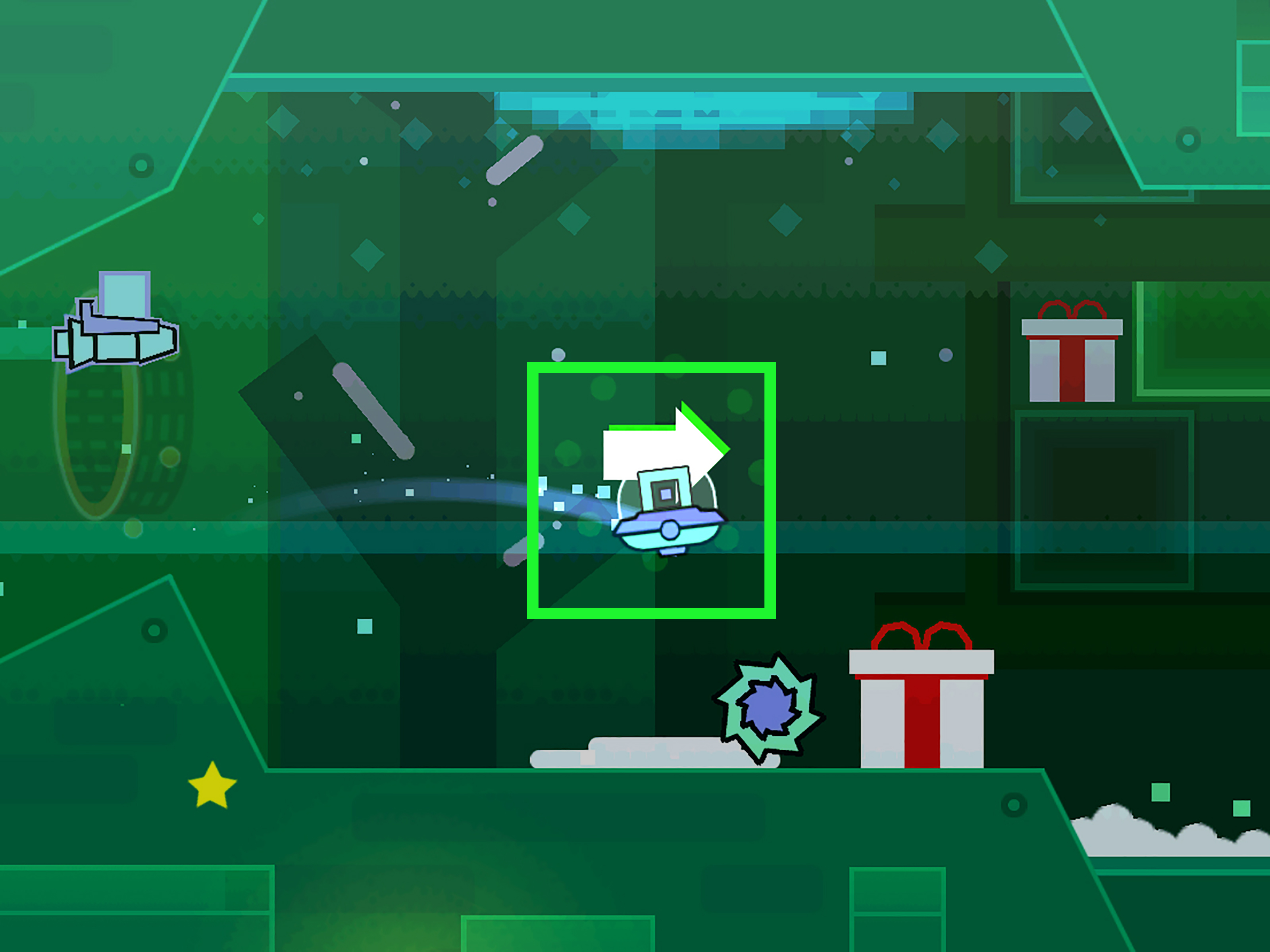
UFO gameplay is about controlled bounces. Each click gives a jump, so clicking too fast can throw you into spikes. Count the jumps if needed: one, two, pause, one, two.
Wave
Wave is pure precision. Use short taps, stay calm, and focus on the path ahead. For fast wave parts, practice slowly in your mind first. The wave loves panic. Do not feed it.
Robot and Spider
Robot jumps change based on how long you hold, while spider teleports instantly between surfaces. For robot, learn jump height. For spider, focus on timing and direction. Spider sections often look scarier than they are once you memorize them.
Learn the Music, But Do Not Depend on It Completely
Geometry Dash is rhythm-based, so music can help you time jumps. Many Demon levels sync clicks with the soundtrack, especially in cube, wave, and UFO sections. Listen for beats, drops, and repeating patterns. A click that feels impossible visually may become easier when matched to the song.
However, do not rely only on audio. Some levels use off-beat timings, tricky sync, or sudden transitions. Combine sound cues with visual landmarks. A strong player uses both eyes and ears. A panicking player uses neither and then blames lag.
Use Copyable Levels and Start Positions Carefully
Many players practice difficult Demons using copyable versions of levels in the editor, where they can place start positions and train specific parts. This can be useful for learning long or difficult sections, especially when Practice Mode checkpoints are not enough.
Use this method honestly. The goal is to improve your consistency, not to fake progress. Start positions help you practice a section repeatedly, but the real victory still comes from beating the full level in normal mode. Think of it like studying before a test. It is allowed. The test still counts.
Build Consistency Before Going for 100%
One of the best ways to beat a hard Demon is to stop trying to beat it too early. That sounds strange, but it works. If you can only reach 60% once every fifty attempts, you are probably not ready for serious full runs yet. You need consistency.
Set smaller goals first:
- Complete 70–100% three times.
- Complete 50–100% twice.
- Complete the hardest section five times in Practice Mode.
- Reach a new best percentage without caring about completion.
These goals keep your motivation alive. They also prove that your completion is not based on one lucky miracle attempt blessed by the cube gods.
Control Your Nerves Near the End
The last 20% of a Demon is not always the hardest part mechanically, but it often feels like it. Your hands get sweaty. Your heartbeat rises. The level suddenly looks unfamiliar even though you practiced it for two hours. This is called nerves, and every Geometry Dash player knows the pain.
To manage nerves, practice the ending more than the beginning. If you can complete 80–100% repeatedly, the ending becomes familiar instead of terrifying. Also, breathe normally during attempts. Many players unconsciously hold their breath during hard sections, which turns the final stretch into a tiny personal panic concert.
Fix Common Mistakes That Stop Demon Progress
Spamming Attempts Without Learning
Playing 500 attempts is not useful if all 500 attempts repeat the same mistake. After a death, ask why it happened. Was your click early? Late? Did you forget a portal? Did you enter the section too high or too low?
Changing Levels Too Often
If you quit every Demon after one bad session, you never build deep consistency. Choose a realistic level and commit long enough to learn it.
Ignoring Breaks
When you are tired, your timing gets worse. If you are dying to easy parts repeatedly, take a break. Your brain may need rest more than another angry attempt.
Playing With Bad Settings
Use settings that make the game comfortable. Reduce distractions, check your controls, and make sure your device runs smoothly. A clean setup will not beat the Demon for you, but it can prevent unnecessary frustration.
Example Demon Practice Plan
Here is a simple plan you can use for almost any difficult Demon:
- Day 1: Do a full Practice Mode run. Learn all sections and identify the hardest parts.
- Day 2: Practice the hardest section until you can pass it three times.
- Day 3: Practice the ending and complete 70–100% multiple times.
- Day 4: Work on middle-to-end runs like 40–100% or 50–100%.
- Day 5: Start normal attempts, but return to practice whenever one section becomes inconsistent.
This schedule is flexible. Some Demons may take one evening. Others may take weeks. The important thing is that every session has a purpose.
Extra Experience: What Beating Difficult Demons Really Feels Like
When you first start grinding a difficult Demon, the level may feel completely impossible. The opening kills you. The ship part laughs at you. The wave section turns your icon into confetti. You may wonder how anyone has ever beaten this thing without being part robot. That feeling is normal. In fact, it is part of the process.
The first stage is confusion. You do not know where to click, what to hold, or why that one blue orb keeps betraying you. At this point, Practice Mode is your best friend. Place checkpoints, slow your brain down, and stop trying to look impressive. Everyone looks terrible when learning a hard level. The leaderboard heroes looked terrible too; they just kept going after the terrible part.
The second stage is recognition. Suddenly, the level stops looking like random chaos. You begin to remember the first ship pattern. You know the wave corridor needs two short taps and one longer hold. You start noticing the music cues. You still die often, but now the deaths make sense. That is progress, even if the percentage number is being rude.
The third stage is section consistency. This is where the level becomes addictive. You complete 60–100% for the first time and feel like you just won a tiny Olympic medal. Then you do 50–100%. Then maybe 35–100%. Each run teaches your hands what your brain already knows. The level becomes less of a mystery and more of a routine.
The fourth stage is full-run pressure. This is where the real emotional circus begins. You pass the hard part from 0% and immediately forget how fingers work. You die at 82%. Then 89%. Then 94%. Maybe even 98%, which is legally considered a jump scare in the Geometry Dash community. The key is not to panic. Late deaths are painful, but they also prove you can reach the ending. That means completion is close.
The final stage is the winning attempt. It often feels strangely calm. You pass the first hard section. You pass the middle. Your hands get nervous, but the practice takes over. The ending arrives, and because you practiced it properly, it does not feel like a monster anymore. Then the screen reaches 100%, the level completes, and all those failed attempts suddenly become part of the story.
That is the real experience of beating difficult Demons in Geometry Dash. It is not about being perfect from the start. It is about turning impossible into familiar, one section at a time. Every death gives information. Every practice run builds control. Every new best proves that your skill is growing. And when you finally beat the level, you do not just get stars, moons, or bragging rights. You get the satisfaction of knowing you stayed patient when the spikes were doing their absolute worst.
Conclusion
Learning how to beat difficult Demons in Geometry Dash is not about secret hacks or superhuman reflexes. It is about smart practice, realistic progression, strong section training, and a calm mindset. Use Practice Mode with purpose. Break levels into smaller parts. Train weak game modes. Practice endings until nerves lose their power. Most importantly, choose Demons that challenge you without crushing your motivation into digital dust.
Every skilled Geometry Dash player started by dying thousands of times. The difference is that they learned from those deaths. So the next time a Demon level sends you back to 0%, do not rage-quit immediately. Take a breath, study the mistake, and try again with a plan. The spikes may be sharp, but your practice can be sharper.

