
Beauty Tools & Accessories
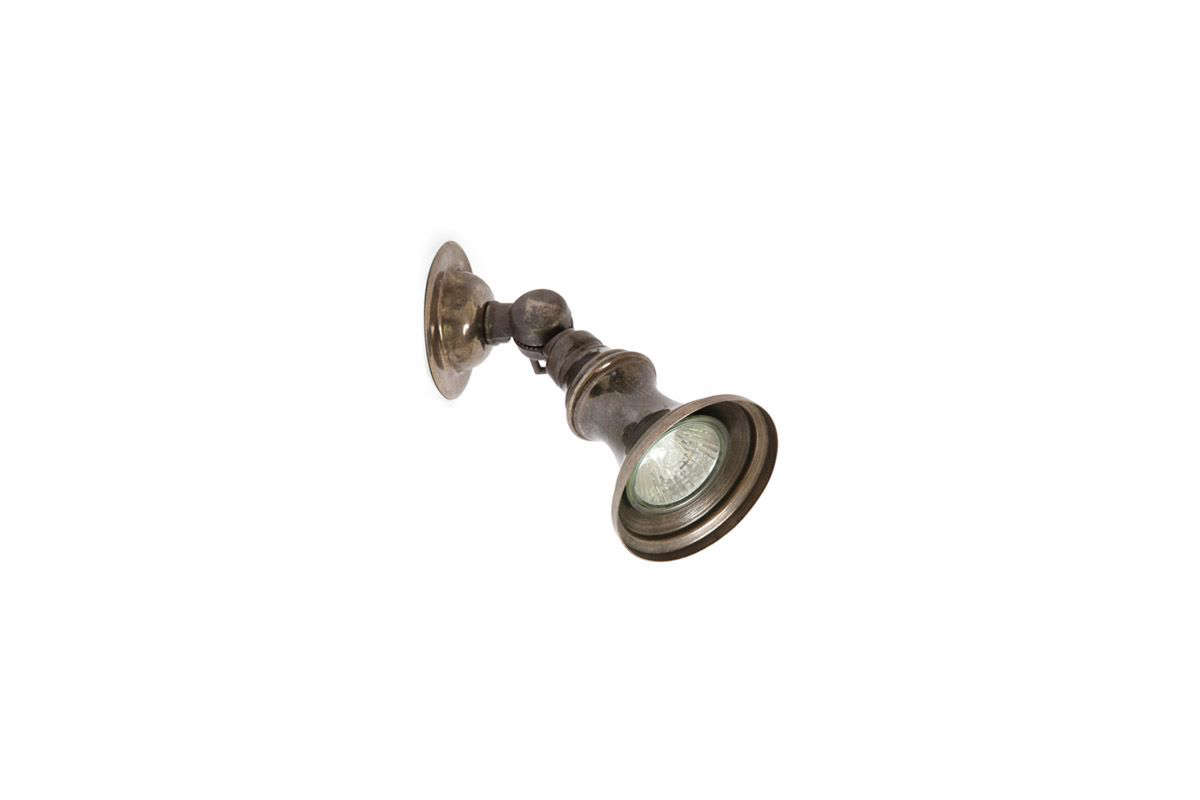
Aire Lighting Rustic Brass Spotlight
Jun
The Aire Lighting Rustic Brass Spotlight is proof that a small fixture can possess a surprisingly large personality. Compact, adjustable, and available in several character-rich metal finishes, this Irish-made light is designed to work on either a wall or a ceiling. Its job is not to flood an entire room like a stadium at kickoff. Instead, it directs attention exactly where you want it: toward a painting, a bookshelf, a kitchen work surface, an architectural detail, or that heroic houseplant that has somehow survived three vacations.
With its nostalgic brass construction and practical jointed design, the fixture blends old-world workshop style with modern directional lighting. It can complement rustic interiors, traditional homes, industrial lofts, English country kitchens, compact reading corners, and even minimalist rooms that need one warm detail to keep them from feeling like a very elegant dentist’s office.
What Is the Aire Lighting Rustic Brass Spotlight?
The Aire Lighting Rustic Brass Spotlight is a small directional fixture intended for wall-mounted or ceiling-mounted use. A joint between the base and shade allows the light to be aimed toward a specific surface or object. That adjustability makes it more versatile than a fixed downlight and more visually discreet than a large track-lighting system.
Published product information lists a round mounting rosette measuring approximately 6.5 centimeters, or 2.6 inches, in diameter. The shade is about 8 centimeters, or 3.1 inches, across, while the total height or projection is approximately 16.5 centimeters, or 6.5 inches. Those modest dimensions make the fixture useful where a larger wall sconce would appear bulky.
“`
Available Metal Finishes
The spotlight has been offered in several finishes, including patinated antique brass, patinated antique silver, polished brass, and satin brass. Each version changes the personality of the fixture without altering its essential form.
- Patinated antique brass creates the warmest and most traditional appearance.
- Polished brass has a brighter, more formal presence and reflects surrounding light.
- Satin brass provides a softer glow with fewer obvious reflections and fingerprints.
- Patinated antique silver introduces a cooler, aged-metal look that suits industrial and monochromatic rooms.
The right finish depends less on which one is “best” and more on whether you want the spotlight to blend quietly with nearby hardware or act as a visible decorative accent.
Why This Rustic Brass Spotlight Stands Out
A Compact Fixture With Genuine Visual Weight
Many compact spotlights are designed to disappear into the ceiling. The Aire Lighting fixture takes the opposite approach. It remains small, but its brass body, visible joint, and traditional profile make it part of the room’s decoration. It illuminates another object while still being interesting enough to notice on its own.
This balance is useful in carefully designed interiors. A giant decorative fixture can dominate a modest room, while an anonymous plastic spotlight may feel out of place beside wood cabinetry, aged stone, handmade tile, or antique furniture. The Aire Lighting Rustic Brass Spotlight occupies the comfortable middle ground: noticeable but not theatrical.
Directional Light Without a Track System
Track lighting is practical, but its rails and multiple heads do not suit every room. A single adjustable brass spotlight provides targeted illumination without stretching visible hardware across the ceiling. It can be installed individually or repeated in a thoughtful arrangement.
For example, three fixtures can be positioned above a long bookcase, with each shade aimed at a separate shelf section. A pair can frame a fireplace. One ceiling-mounted fixture can highlight a sculpture, while another can direct light onto a textured brick wall. The result feels customized rather than commercially standardized.
A Design Rooted in Traditional Materials
Aire Lighting is associated with nostalgic fixtures inspired by lighting found in pubs, inns, workshops, breweries, and country houses. The Rustic Brass Spotlight carries that influence without looking like a theatrical reproduction. Its form is simple enough to sit comfortably beside modern furniture, yet its metal finishes add the warmth and irregular character often missing from mass-produced fixtures.
Where the Aire Lighting Rustic Brass Spotlight Works Best
Artwork and Gallery Walls
Directional accent lighting helps establish a visual focal point. Mounted above or near a painting, the spotlight can draw attention to color, texture, and detail that might otherwise disappear after sunset. It is particularly effective with framed prints, oil paintings, woven wall hangings, carved panels, and small collections displayed together.
The fixture should be aimed carefully to avoid harsh glare on glass-covered artwork. A wider beam and moderate brightness will usually produce a gentler result than an extremely narrow, intense beam. Valuable or light-sensitive art may also require professional lighting advice to limit long-term exposure.
Bookshelves and Display Cabinets
A brass wall spotlight above open shelving can transform books, ceramics, photographs, and collected objects into a deliberate display. The light adds depth by producing highlights and shadows rather than illuminating every shelf with equal intensity.
For built-in cabinetry, the antique brass version pairs naturally with dark green, navy, black, cream, and stained wood finishes. Satin brass feels especially at home beside white oak or walnut, while antique silver can complement steel shelving and concrete walls.
Kitchens and Breakfast Areas
The fixture can provide supplemental task or accent lighting in a kitchen, especially above a small prep area, open shelf, coffee station, or breakfast nook. It should not be expected to replace the room’s primary ambient lighting. Kitchens generally perform best with several layers: overall illumination for safe movement, focused task light for work surfaces, and accent light for visual warmth.
One well-aimed rustic ceiling spotlight can illuminate a favorite stone backsplash or a row of pottery. In this role, the light contributes atmosphere while the serious countertop illumination is handled by appropriately placed task fixtures.
Bedside and Reading Corners
Wall mounting can free space on a small nightstand and provide more precise light than a traditional table lamp. The adjustable joint lets the user direct the beam toward a book and then turn it away when softer illumination is preferred.
Placement matters. The fixture should be positioned so the bulb is not directly visible from the pillow or chair. Otherwise, the charming brass spotlight may become a charming brass interrogation device.
Entryways, Hallways, and Hospitality Spaces
Compact spotlights are useful in transitional areas where large fixtures may interfere with doors or sightlines. In a hallway, they can emphasize framed art or a console table. In a restaurant, boutique, or home bar, the brass finish can reinforce a warm hospitality atmosphere associated with traditional pubs and intimate dining rooms.
Choosing the Right GU10 Bulb
The published European specification identifies a GU10 light source. Selecting the bulb should involve more than grabbing the first GU10 package on the shelf. Brightness, color temperature, color rendering, beam angle, voltage, physical size, and dimming compatibility all affect the finished result.
Think in Lumens, Not Just Watts
Wattage describes energy consumption, while lumens describe visible light output. An efficient LED can produce useful brightness while consuming far less power than an older incandescent or halogen lamp. For accent lighting, extreme brightness is rarely necessary. A moderate-output lamp is often enough for a shelf, picture, or architectural feature, particularly in an already illuminated room.
One current retailer option associated with the fixture lists an LED output around 375 lumens with a color-rendering value above 97. That level can be suitable for highlighting objects without overwhelming a small space, although the correct output will depend on mounting distance, beam angle, surrounding finishes, and room brightness.
Select a Comfortable Color Temperature
For a fixture with rustic brass character, a warm-white bulb between approximately 2700K and 3000K is usually the most natural match. It emphasizes wood tones, brick, leather, warm paint colors, and the golden qualities of brass.
A cooler 3500K or 4000K lamp may work in a kitchen, studio, or contemporary retail setting where visual crispness is more important than coziness. However, a very cool bulb can make antique brass feel less inviting and may create an odd visual disagreement between the nostalgic fixture and the clinical light coming out of it.
Prioritize High Color Rendering
Color Rendering Index, commonly shortened to CRI, describes how accurately a light source reveals colors compared with a reference source. A CRI of at least 80 is generally acceptable for residential use, but a rating of 90 or higher is preferable for artwork, textiles, food preparation, books, and decorative displays.
A high-CRI GU10 bulb helps reds remain rich, wood look natural, and artwork retain the color relationships intended by its creator. Low-quality light can make a beautifully decorated shelf look as though everything was selected during a power outage.
Match the Beam Angle to the Job
A narrow beam creates a concentrated pool of light and greater drama. It is useful for a small sculpture or a single framed piece. A wider beam produces softer coverage for bookshelves, larger paintings, or work surfaces.
Before installation is finalized, test the bulb from approximately the proposed mounting position. This simple experiment reveals whether the beam is too tight, too broad, too bright, or aimed at the wrong part of the wall.
Important Considerations for U.S. Installations
Published specifications for the Aire Lighting Rustic Brass Spotlight describe a 230-volt European configuration. Standard residential electrical service in the United States commonly supplies 120 volts to lighting circuits. A U.S. buyer should therefore confirm the exact voltage, lampholder, wiring configuration, grounding provisions, and certification of the version being purchased.
Do not assume that replacing a European GU10 bulb with a 120-volt GU10 bulb automatically resolves every compatibility issue. The complete fixture, not merely the bulb, must be suitable for the electrical system and installation location.
Use a Qualified Electrician
Hardwired lighting should be installed according to the manufacturer’s instructions and applicable local electrical codes. A licensed electrician can determine whether the mounting box, conductors, grounding method, switch, dimmer, and fixture rating are appropriate.
This is especially important with imported lighting. Product certification accepted by the local authority should be verified before installation. Attractive brass is wonderful. Attractive brass connected incorrectly to household wiring is considerably less wonderful.
Check Dimmer Compatibility
If dimming is desired, the GU10 LED must be labeled as dimmable, and the wall control must be compatible with that specific type of LED load. Mismatched bulbs and dimmers can produce flickering, buzzing, limited dimming range, delayed startup, or a light that refuses to turn fully off.
Respect Location Ratings
The Rustic Brass Spotlight should not be installed in a bathroom, covered porch, or other damp environment unless the exact model is rated for that location. A brass exterior does not automatically make a fixture moisture-resistant. Indoor decorative lighting and wet-location lighting are tested for different conditions.
How to Style an Adjustable Brass Spotlight
Rustic and Country Interiors
Pair patinated brass with exposed beams, limewashed walls, handmade tile, oak furniture, stone floors, woven baskets, and linen textiles. The fixture looks particularly convincing when it appears to have accumulated naturally with the architecture rather than arriving as part of a perfectly matched lighting package.
Industrial Rooms
Use the spotlight with brick, dark-painted steel, concrete, reclaimed timber, and visible hardware. Antique silver can create a cooler workshop effect, while aged brass adds contrast and prevents the space from becoming visually severe.
Traditional and Transitional Homes
Polished or satin brass can coordinate with cabinet pulls, faucets, door hardware, and framed mirrors. Exact matching is not essential. In fact, a room often looks more collected when metal finishes are related but not identical.
Modern Minimalist Spaces
A single rustic brass ceiling spotlight can provide welcome tension in an otherwise restrained room. Against a white ceiling or plaster wall, the fixture becomes a small sculptural object. The traditional material adds warmth without requiring extra furniture or decorative clutter.
Cleaning and Caring for the Brass Finish
Before cleaning, determine whether the surface is polished, satin, lacquered, plated, or intentionally patinated. Aggressive polishing can remove an aged finish that was applied deliberately. It may also create a bright patch that looks strangely new compared with the rest of the fixture.
For routine maintenance, switch off the power and allow the lamp to cool completely. Remove dust with a soft, dry microfiber cloth. Fingerprints and light grime may be addressed with a slightly damp cloth and mild soap if the manufacturer permits it. Dry the fixture promptly rather than leaving moisture on the metal.
Abrasive pads, steel wool, harsh chemicals, and enthusiastic scrubbing should be avoided. The goal is to clean the light, not erase its entire life story. Patina is often part of the appeal of rustic brass and can help the fixture develop richer visual character over time.
Commercial brass polish or acidic homemade cleaners may be appropriate for some unlacquered polished-brass objects, but they are not automatically suitable for every lighting finish. Test any method in an inconspicuous area and follow the manufacturer’s care instructions.
Advantages and Potential Drawbacks
Advantages
- Compact size works in narrow walls, low ceilings, and small rooms.
- Adjustable joint supports accent lighting and focused task lighting.
- Wall or ceiling installation increases design flexibility.
- Several metal finishes suit both traditional and contemporary interiors.
- Replaceable GU10 lamps allow the beam, brightness, and color quality to be customized.
- Brass construction brings warmth and texture to otherwise plain surfaces.
Potential Drawbacks
- The small shade is not intended to provide broad whole-room illumination.
- Imported electrical specifications require careful verification for U.S. use.
- A directional beam can create glare if mounted or aimed poorly.
- Polished finishes may show fingerprints and require more frequent attention.
- Natural or intentionally aged brass may continue changing color over time.
- Professional installation adds cost but may be necessary for code compliance and safety.
Living With the Aire Lighting Rustic Brass Spotlight: An Experience-Based Perspective
The practical experience of using a small adjustable brass spotlight begins before anyone touches a screwdriver. The first surprise is usually scale. Product photography can make a compact fixture appear larger, but its real advantage becomes obvious when it is held near a bookshelf, narrow wall, or ceiling beam. It occupies very little visual territory. Rather than announcing itself from across the room, it waits for someone to notice the warm metal and mechanical joint.
Choosing the mounting point is the most consequential part of the process. A difference of several inches can determine whether the beam lands beautifully on a painting or reflects directly into the viewer’s eyes. A useful approach is to test the planned position with a temporary lamp or flashlight. This reveals where shadows fall and whether the light covers the intended object. It also prevents the classic renovation ritual of drilling first and developing wisdom second.
Once correctly positioned, the spotlight changes how a room feels after dark. A bookcase that previously disappeared into a flat wall becomes a focal point. Ceramic pieces cast small shadows, book spines gain depth, and framed artwork appears more deliberate. The fixture does not need to be extremely bright. In many rooms, moderate output creates a more convincing result because the surrounding light remains visible and the highlighted object does not look as though it is being questioned by customs officers.
The choice between 2700K and 3000K can also be more noticeable than expected. At 2700K, antique brass looks mellow and traditional. Walnut, leather, terracotta, and warm white paint become especially comfortable. At 3000K, the scene feels a little cleaner and more contemporary while retaining warmth. A high-CRI lamp makes the biggest difference when the beam is aimed at artwork, food, fabrics, or colorful books.
Adjustability becomes useful even when the fixture is rarely moved. A slight change in angle can accommodate a new painting, a taller vase, or a rearranged shelf. However, the joint should be handled gently rather than repeatedly forced into position. Small precision fittings tend to reward calm behavior, which is also excellent general advice for home improvement and family group chats.
Over time, a patinated brass finish can become one of the fixture’s most appealing qualities. Dust is easy to remove with a soft cloth, but the temptation to polish every darkened area should be resisted. The aged surface gives the spotlight depth and prevents it from looking overly decorative. In a room with vintage furniture or natural materials, slight variation in the metal helps the fixture belong.
The final experience is less about owning a dramatic statement light and more about gaining control over attention. The Aire Lighting Rustic Brass Spotlight allows a homeowner to decide what deserves to be seen after sunset. It turns a quiet shelf, painting, stone wall, or reading chair into the visual center of the room. That is a substantial achievement for a fixture roughly the size of a large coffee mug.
Final Verdict
The Aire Lighting Rustic Brass Spotlight is best suited to buyers who value traditional materials, compact proportions, and adjustable accent lighting. It is not a substitute for a complete room-lighting plan, nor is it a generic fixture that disappears into the architecture. Its appeal comes from combining practical directional illumination with the warmth of an intentionally visible brass object.
Used above artwork, shelving, a bedside table, or an architectural feature, it can create a focused layer of light that makes the room feel deeper and more considered. The range of finishes also allows the same basic design to lean rustic, industrial, polished, or transitional.
For U.S. projects, electrical compatibility must be confirmed before purchase and installation because published specifications describe a European 230-volt model. Once those technical details are resolved, the fixture offers a charming alternative to anonymous recessed lights and bulky track systems. It is small, useful, adaptable, and just decorative enough to make people ask where it came fromwhich is generally what good lighting does when it is not busy helping everyone find the snacks.
“`

