
Makeup
Succulent Fairy Garden
Jun
A succulent fairy garden is what happens when low-maintenance plants meet tiny houses, pebble paths, pocket-sized benches, and the quiet belief that somewhere, a fairy has strong opinions about patio furniture. It is a miniature landscape made with drought-tolerant succulents, decorative accents, and a container small enough to sit on a porch, windowsill, balcony, office desk, or garden table.
The best part? You do not need a giant backyard, a degree in botany, or a fairy real estate license. Succulents naturally bring texture, color, and sculptural shape to small spaces. Their plump leaves store water, their growth habits are usually tidy, and many varieties tolerate the occasional “Oops, I forgot to water you” moment better than thirstier houseplants. That makes them perfect for a whimsical mini garden that looks magical without requiring a daily maintenance ceremony involving mist, chanting, and panic.
This guide explains how to design, plant, and care for a succulent fairy garden that is beautiful, healthy, and practical. We will cover container choice, soil, plant selection, layout ideas, care tips, common mistakes, and hands-on experience that can save your tiny garden from becoming a soggy kingdom of regret.
What Is a Succulent Fairy Garden?
A succulent fairy garden is a miniature garden scene that uses succulents as the living landscape. The plants become trees, shrubs, groundcovers, hedges, and dramatic “mountains” around small accessories such as fairy cottages, bridges, stones, shells, mushrooms, signs, lanterns, or pathways.
Unlike a traditional fairy garden that may use mosses, ferns, or moisture-loving plants, a succulent version is built around excellent drainage and lower water needs. This matters because succulents do not enjoy sitting in wet soil. In fairy language, wet feet are considered rude. In plant language, they can lead to root rot.
A well-designed succulent fairy garden balances two goals: it should look like a tiny enchanted world, and it should also respect the needs of the plants. That means choosing compatible succulents, using a fast-draining potting mix, placing decorations carefully, and watering only when the soil has dried out.
Why Succulents Work So Well in Fairy Gardens
Succulents are popular for fairy gardens because they are compact, colorful, and full of personality. An Echeveria rosette can look like a blooming cabbage rose. A Haworthia can resemble a spiky little forest. Sedum can trail over the edge of a pot like a green waterfall. Crassula can mimic a tiny tree. Put them together, and suddenly your planter has more drama than a fantasy novel.
Another advantage is scale. Fairy gardens depend on proportion. Large leaves can make a tiny bench look ridiculous, as if it belongs to a fairy who accidentally moved into a jungle. Many succulents stay small or grow slowly, so they help maintain the miniature illusion longer.
Succulents also offer design variety. You can create a desert fairy village, a woodland cottage scene, a beachy shell garden, a broken-pot castle, a modern tiny patio, or a seasonal holiday display. The plants provide the living structure, while the accessories tell the story.
Best Succulents for a Fairy Garden
The best succulents for fairy gardens are small, slow-growing, and suited to the light conditions where the garden will live. Always check the care tag before buying because not every succulent wants the same amount of sun, water, or winter protection.
1. Echeveria
Echeveria is a classic choice because it forms neat rosettes in shades of green, blue, pink, lavender, and gray. It works beautifully as a “flower” near a fairy house or as the centerpiece of a shallow bowl garden.
2. Haworthia
Haworthia is compact and architectural. Its striped or textured leaves look excellent in indoor fairy gardens, especially where light is bright but not harsh. It is a good option when you want a plant that looks interesting without growing like it is trying to escape.
3. Sedum
Sedum is useful as a groundcover or trailing edge plant. Some varieties creep gently across the soil, making them ideal near paths, steps, or tiny fences.
4. Sempervivum
Sempervivum, often called hens and chicks, is especially useful for outdoor succulent fairy gardens in cooler climates because many varieties are cold-hardy. Their tight rosettes multiply over time, giving the garden a charming village effect.
5. Crassula
Small Crassula varieties can imitate miniature trees or shrubs. A jade plant cutting, for example, can become the “old tree” beside a fairy cottage. It may eventually outgrow the scene, but that is just nature’s way of saying the fairy neighborhood is ready for a remodel.
6. String Succulents
String of pearls, string of bananas, and similar trailing succulents can look magical spilling from a pot or hanging basket. Use them where they have room to drape and where they will receive enough bright light.
Supplies You Need
Before you start, gather your materials. A little planning prevents the classic mid-project problem of holding a tiny ceramic mushroom in one hand while realizing you forgot soil.
- A shallow container with drainage holes
- Cactus or succulent potting mix
- Extra perlite, pumice, or coarse sand if the mix needs better drainage
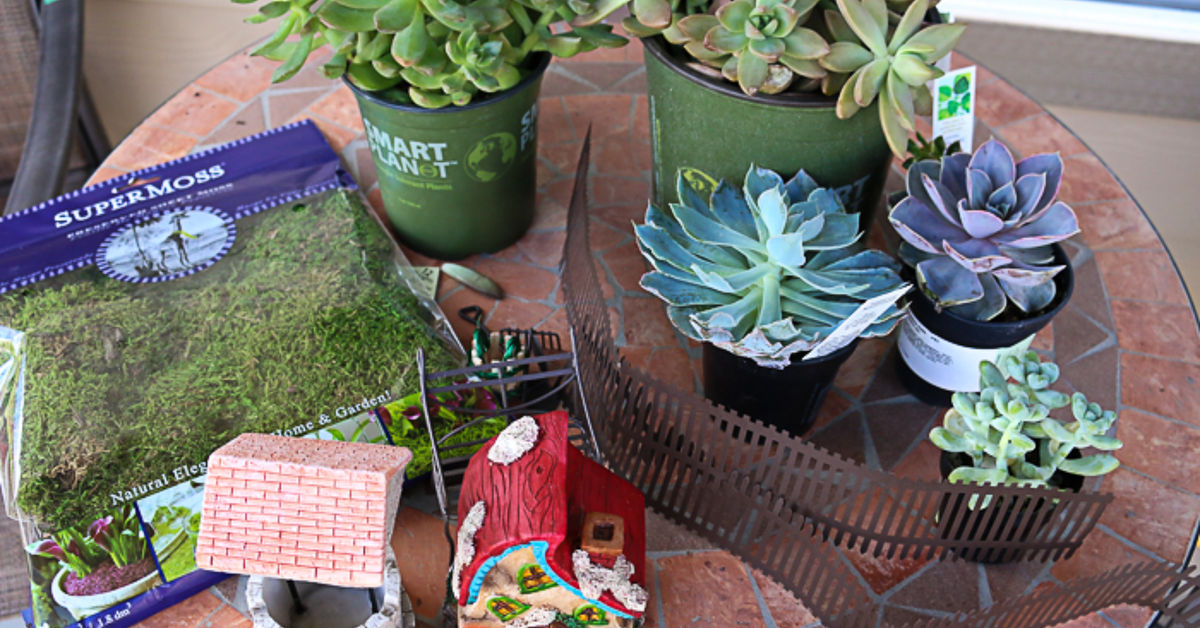
- Small succulents or cuttings
- Mini fairy garden accessories
- Decorative gravel, pebbles, or crushed stone for top dressing
- A spoon, chopstick, small trowel, or paintbrush
- Gardening gloves if using spiky plants
A container with a drainage hole is strongly recommended. Decorative bowls without drainage may look pretty, but they make watering more difficult and increase the risk of root rot. If you absolutely must use a container without drainage, treat it as a display cachepot and keep the actual planted pot inside it. Your succulents will thank you by not quietly turning into soup.
Choosing the Right Container
The container sets the mood of the garden. A terra-cotta dish gives a rustic desert look. A broken pot creates a tiered fairy village. A wooden box feels cottage-like. A birdbath can become a dramatic outdoor centerpiece. A teacup can be adorable, though it is better for temporary displays or carefully managed cuttings because drainage is usually limited.
For beginners, a wide shallow pot with at least one drainage hole is the safest choice. Succulents often have relatively shallow roots, so they do not need an extremely deep planter. What they do need is airflow, drainage, and enough space between plants so moisture does not get trapped around their crowns.
If your garden will live outdoors, choose a sturdy container that can handle sun, rain, wind, and temperature changes. If it will live indoors, place a saucer under the pot to protect furniture, but empty standing water after watering.
The Best Soil for a Succulent Fairy Garden
Succulent fairy gardens need soil that drains quickly. Regular garden soil is usually too heavy for containers, and moisture-retentive potting mixes can stay wet longer than succulents prefer. Use a labeled cactus or succulent mix, or improve a light potting mix with mineral ingredients such as perlite, pumice, or coarse sand.
The goal is simple: water should move through the soil instead of lingering like an awkward guest after the party ends. A gritty mix helps air reach the roots and reduces the chance of rot. Decorative gravel can be used as a top dressing, but do not rely on a thick gravel layer at the bottom of the pot to “create drainage.” Good drainage comes from the pot hole and the soil structure, not from a secret basement of rocks.
How to Make a Succulent Fairy Garden Step by Step
Step 1: Pick a Theme
Start with a simple idea. Do you want a woodland fairy cottage, a desert village, a beach garden, a tiny farm, a moonlit castle, or a modern fairy patio? A theme keeps the design from turning into a yard sale for elves.
Step 2: Test the Layout Before Planting
Place your largest accessories and plants on top of the empty container first. Decide where the fairy house, path, and focal plant will go. Good miniature gardens usually have a focal point, a path or visual line, and a few open spaces so the scene can breathe.
Step 3: Add Soil
Fill the container with succulent mix, leaving a little space below the rim. This headspace keeps soil and pebbles from spilling every time you water.
Step 4: Plant the Succulents
Remove each succulent from its nursery pot and gently loosen any circling roots. Plant larger succulents first, then tuck smaller plants around them. Keep the crown of each plant slightly above the soil line so water does not collect in the center.
Step 5: Add Paths and Accessories
Create a path with tiny pebbles, crushed stone, sand, or small flat rocks. Add furniture, fences, doors, signs, shells, or figurines. Keep accessories from pressing tightly against succulent stems or leaves, and avoid burying decorations so deep that they block airflow.
Step 6: Finish with Top Dressing
A thin layer of decorative gravel makes the garden look polished and helps keep soil from splashing onto leaves. Choose a color that supports your theme: white gravel for a bright modern look, tan stones for a desert scene, dark pebbles for contrast, or mixed natural stones for a woodland feel.
Step 7: Water Carefully
If the soil is dry, water lightly after planting and let excess water drain completely. If roots were damaged during planting, some gardeners prefer to wait a day or two before watering. After that, water only when the soil is dry. Do not mist succulents as a primary watering method; they prefer a proper drink followed by a dry period.
Light Requirements: Bright, Not Brutal
Most succulent fairy gardens need bright light. Indoors, a sunny windowsill, bright south- or west-facing window, or strong grow light can work well. Outdoors, morning sun with afternoon shade is often ideal, especially in hot climates where harsh afternoon sun can scorch tender leaves.
Newly planted succulents may need gradual exposure to stronger light. If your plants stretch, lean, or become pale, they may need more brightness. If leaves develop sunburn patches, move the garden to a gentler spot. Think of succulents as sun lovers with boundaries. They enjoy a good glow-up, not a solar interrogation.
Watering a Succulent Fairy Garden
Watering is the make-or-break skill. The safest rule is to check the soil, not the calendar. Push a finger, chopstick, or moisture meter into the soil. If it still feels damp, wait. If it is dry, water thoroughly until water exits the drainage hole, then let the pot drain fully.
Indoor gardens generally need less frequent watering than outdoor gardens because they receive less heat, wind, and sun. Winter watering should usually be reduced because many succulents grow more slowly in cooler, darker months. Overwatering is far more common than underwatering, so when in doubt, pause before pouring.
Design Ideas for a Succulent Fairy Garden
Desert Fairy Village
Use Echeveria, Haworthia, small cacti, gravel, and terracotta accents. Add a tiny adobe-style house, clay steps, and a pebble path. This theme looks clean, sunny, and wonderfully low-water.
Woodland Cottage Garden
Use green rosette succulents, small bark pieces, natural stones, and a cottage figurine. Skip live moss unless the garden is temporary, because moss usually wants more moisture than succulents do.
Broken Pot Fairy Garden
A broken terra-cotta pot can become a tiered landscape. Arrange shards as retaining walls, plant succulents on different levels, and use pebbles as stairs. It is the rare time breaking a pot feels like artistic growth instead of clumsiness.
Beach Fairy Garden
Use pale gravel, shells, blue glass stones, and trailing sedum. Add a tiny chair, driftwood, and a “fairy beach hut.” Keep shells as decoration rather than mixing too many into the soil.
Indoor Desk Garden
Choose compact succulents such as Haworthia, Gasteria, or small Echeveria. Keep the design simple and place it where it receives strong light. A desk garden is excellent for people who want nature nearby but do not want a plant that demands daily emotional support.
Common Mistakes to Avoid
- Using a pot without drainage: This is the fastest route to root problems.
- Mixing succulents with moisture-loving plants: Ferns and mosses usually need different care.
- Overcrowding: Plants need airflow and room to grow.
- Misting instead of watering properly: Succulent roots need occasional deep watering, not surface sprinkles.
- Putting indoor succulents in low light: Many will stretch and lose their compact shape.
- Using too many accessories: A fairy garden should feel magical, not like a tiny storage unit.
Seasonal Care and Maintenance
A succulent fairy garden is not completely maintenance-free, but it is easy to manage. Remove dead leaves from the base of plants so pests and moisture do not collect. Rotate indoor gardens every week or two so plants grow evenly. Trim leggy growth and replant healthy cuttings if the scene begins to look wild.
During spring and summer, you can feed lightly with a diluted succulent fertilizer if the plants are actively growing. Avoid heavy fertilizing because fast, weak growth can spoil the compact miniature look. In fall and winter, reduce watering and stop fertilizing unless your plants are under strong grow lights and actively growing.
Outdoor succulent fairy gardens may need protection from heavy rain, frost, or intense heat depending on the plants you choose. Move containers under cover during storms if needed. In cold climates, bring tender succulents indoors before freezing temperatures arrive.
Safety Tips for Homes with Kids and Pets
Fairy gardens often attract curious children, cats, dogs, and anyone who cannot resist touching a tiny chair. Choose accessories that are not choking hazards if young children are nearby. Avoid sharp cactus spines in play areas. Also check plant toxicity before bringing succulents into homes with pets. Some popular succulents can be irritating or toxic if chewed, while others are generally considered safer.
For family projects, use sturdy accessories, smooth stones, and forgiving plants. Let kids design the path or place decorations, but have an adult handle soil depth, drainage, and plant spacing. Otherwise the fairy house may end up buried like an archaeological mystery.
of Real-World Experience: What a Succulent Fairy Garden Teaches You
The first thing people usually learn from making a succulent fairy garden is that miniature design looks easy until you try to place a tiny bench, three pebbles, and a rosette plant in the same two-inch space. Scale matters. A small accessory can look adorable in the store and enormous in the container. Before planting, it helps to arrange everything on a tray and view it from the front, side, and above. The best scene often has fewer pieces than expected. One fairy house, one curved path, three to five plants, and a handful of stones can look more magical than a crowded village where every fairy apparently owns six lawn ornaments.
The second lesson is that succulents have quiet but firm boundaries. They forgive missed watering better than soggy soil. Many beginners want to love the garden with extra water, but succulents do not read love that way. They prefer bright light, dry intervals, and a pot that lets water escape. Once that rhythm clicks, the garden becomes much easier. Instead of asking, “What day do I water?” the better question is, “Is the soil dry yet?” That small shift saves a lot of plants.
Another useful experience is learning to separate decoration from plant care. Preserved moss, miniature fences, shells, and gravel can make the garden beautiful, but they should not trap moisture around the base of plants. A fairy garden can look lush without being damp. In fact, the most successful succulent fairy gardens often use dry-looking materials: gravel paths, bark, sand-colored stones, driftwood, and terra-cotta. These materials support the desert-meets-enchantment style and do not fight the plants’ natural preferences.
Lighting is another teacher. A succulent garden placed too far from a window may stay alive for a while but slowly stretch toward the light. The once-compact rosette begins to look like it is auditioning for a giraffe documentary. Moving the container closer to bright light or adding a grow light can restore healthier growth. Outdoor gardens teach the opposite lesson: full afternoon sun in a hot climate can be too much for tender succulents. Morning sun is often kinder.
The most enjoyable lesson is that a succulent fairy garden is never truly finished. Leaves grow, offsets appear, cuttings root, accessories shift, and themes evolve. A spring garden can become a summer beach scene, a fall harvest cottage, or a winter fairy village with tiny lanterns. The container becomes a small stage, and the succulents are the cast members who slowly change the plot.
Finally, this project teaches patience. Succulents grow at their own pace. A fairy garden does not need to explode with growth to be successful. Its charm comes from detail, balance, and the quiet pleasure of noticing small changes. One new rosette, one rooted cutting, or one path adjusted just right can feel surprisingly satisfying. It is gardening in miniature, but the joy is full-size.
Conclusion
A succulent fairy garden is one of the most charming ways to combine plant care, creativity, and small-space gardening. It works indoors or outdoors, suits beginners and experienced gardeners, and offers endless design possibilities. The secret is to build the fantasy around real plant needs: drainage, fast-draining soil, bright light, careful watering, and compatible succulent varieties.
Start simple. Choose a container with drainage, use a gritty succulent mix, pick small plants, and create a tiny scene with a clear focal point. Add accessories with restraint, water only when the soil is dry, and refresh the garden as it grows. Do that, and your miniature fairy world will stay healthy, whimsical, and photogenic enough to make even the neighborhood gnomes jealous.

