
Skincare
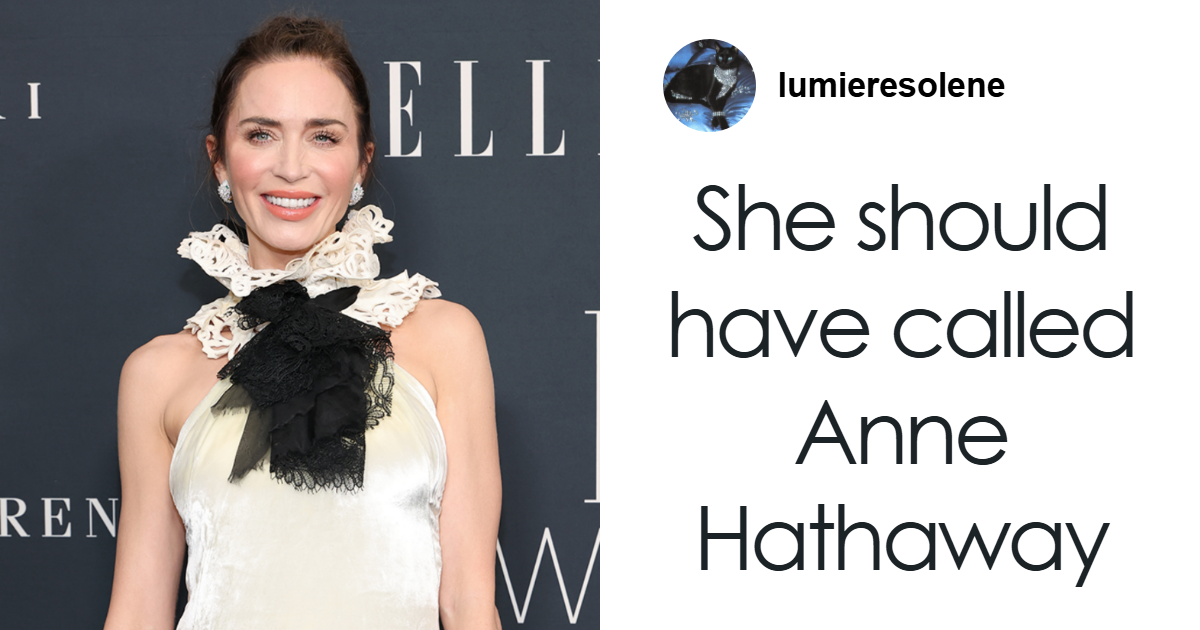
Emily Blunt’s Look On A24 Podcast Sparks Plastic Surgery Rumors
Jun
Emily Blunt has spent more than two decades doing what many actors only dream of: moving between sharp comedy, prestige drama, action, horror, musicals, and awards-season heavyweights without losing her signature wit. So when her appearance on The A24 Podcast with Rose Byrne started trending for something other than the conversation itself, the internet did what the internet does best: it pulled out a magnifying glass, a ring light, and absolutely no chill.
The episode, titled High Octane with Rose Byrne & Emily Blunt, was released by A24 in December 2025. It was promoted as a warm, actor-to-actor conversation about Byrne’s performance in If I Had Legs I’d Kick You and Blunt’s role in The Smashing Machine. The discussion covered craft, performance pressure, character work, motherhood on screen, Dwayne Johnson, and the nerve-racking vulnerability of acting with a camera inches from your face. Yet after clips circulated online, some viewers focused less on the conversation and more on Blunt’s face, sparking a fresh round of Emily Blunt plastic surgery rumors.
To be clear from the start: there is no confirmed evidence that Emily Blunt has undergone plastic surgery. Blunt has not publicly announced any cosmetic procedure connected to the podcast appearance. What exists is speculation, social media commentary, and a broader cultural habit of treating celebrity faces like public property. That distinction matters, because “people are talking” is not the same thing as “something happened.” One is a digital weather pattern. The other requires facts.
What Happened On The A24 Podcast?
The A24 episode paired Emily Blunt with Rose Byrne for a friendly, deeply complimentary conversation. Both actresses were in awards-season conversations for intense, emotionally demanding performances. Byrne was being recognized for If I Had Legs I’d Kick You, Mary Bronstein’s anxiety-fueled dark comedy about a mother pushed to her breaking point. Blunt, meanwhile, was being discussed for The Smashing Machine, in which she plays Dawn Staples opposite Dwayne Johnson’s Mark Kerr.
Instead of a stiff promotional interview, the podcast felt like two performers comparing notes from the trenches. Blunt praised Byrne’s work as wild, broken, and emotionally raw. Byrne returned the admiration by describing The Smashing Machine as more intimate and fragile than a typical fight movie. The conversation also included lighter moments, including Blunt joking about her nickname for Dwayne Johnson and the practical weirdness of performing under intense camera scrutiny.
That last point became unintentionally relevant. Podcast video clips are not red-carpet portraits. They are usually shot in close-up, under studio lighting, with microphones, tight framing, and minimal cinematic polish. A still image from a paused video can make almost anyone look different. Blink at the wrong half-second and suddenly the internet thinks you have reinvented your cheekbones. It is the modern celebrity equivalent of being judged by your passport photo.
How The Plastic Surgery Rumors Started
Shortly after the A24 clips appeared online, social media users began commenting on Emily Blunt’s appearance. Some claimed she looked different. Others speculated about Botox, fillers, facial surgery, veneers, or other cosmetic work. A few reactions were especially dramatic, joking that a plastic surgeon should be “arrested” or that she should undo whatever they assumed had been done.
That language may be viral, but it is also revealing. Much of the conversation did not come from medical knowledge, verified reporting, or Blunt herself. It came from viewers comparing screenshots, old photos, lighting conditions, facial expressions, and their own expectations of how a famous woman “should” look at 43. In other words, the rumors were built on perception, not proof.
Celebrity appearance discourse often follows a predictable script. First, a star appears in a clip. Second, fans notice a perceived change. Third, social media assigns a cause. Fourth, the rumor becomes a headline. By the time anyone points out that makeup, lighting, aging, camera angle, weight fluctuation, dental work, styling, facial expression, or simply a bad screenshot can change how someone looks, the speculation has already left the station wearing sunglasses and a trench coat.
Has Emily Blunt Responded To The Rumors?
As of the public discussion around the A24 Podcast appearance, Emily Blunt had not confirmed cosmetic surgery or responded directly to the latest wave of speculation. That absence should not be treated as suspicious. Celebrities are not required to issue press releases every time the internet decides their jawline needs a congressional hearing.
Blunt has, however, previously spoken about Hollywood beauty standards in ways that make the rumor conversation more complicated. In past interviews, she has criticized the pressure for an “impassive perfection” in the entertainment industry and expressed appreciation for the stories visible in people’s faces. Those comments have resurfaced because they appear to contrast with the online assumption that she must have altered her appearance.
But even that comparison should be handled carefully. A person can oppose extreme beauty pressure and still age, change styling, experiment with makeup, use skincare, get dental work, have medical treatments, or simply look different from one year to the next. Human faces are not museum exhibits. They move, mature, swell, soften, sharpen, and occasionally get betrayed by overhead lighting that should frankly be illegal.
Why Emily Blunt’s Face Became A Talking Point
Emily Blunt is not just famous; she is familiar. Audiences have watched her evolve from the icy, hilarious Emily Charlton in The Devil Wears Prada to the action-ready Rita in Edge of Tomorrow, the tense survivor mother in A Quiet Place, the emotionally layered Katherine “Kitty” Oppenheimer in Oppenheimer, and the real-life-inspired Dawn Staples in The Smashing Machine. When someone has been on screen for that long, the public feels as though it has a visual memory of them.
That familiarity creates a strange trap. If a celebrity looks exactly the same, people accuse them of “not aging naturally.” If they look older, people accuse them of “letting themselves go.” If they look polished, people suspect procedures. If they look tired, people wonder what happened. The acceptable zone is tiny, imaginary, and constantly shifting. Good luck finding it; it is probably hiding behind a TikTok filter.
Blunt’s case also fits into a wider conversation about women in Hollywood and the impossible expectations placed on actresses over 40. Male actors are often described as rugged, seasoned, or distinguished as they age. Female actors are more often analyzed for signs of intervention, decline, or maintenance. The difference is not subtle. It is practically wearing a neon sign.
The Role Of Botox, Fillers, And Cosmetic Procedure Culture
Part of why rumors like this spread so quickly is that cosmetic procedures have become mainstream. Botox, dermal fillers, laser treatments, skin tightening, facelifts, eyelid surgery, and other aesthetic procedures are now common topics in American beauty culture. They are discussed on podcasts, promoted by influencers, reviewed on social media, and sometimes treated as casually as a haircut or facial.
Because these treatments are common, audiences increasingly assume they can diagnose them by sight. But that confidence is often misplaced. Even trained professionals are cautious about making claims based only on photos or video clips, especially without examining a person or knowing their medical history. Facial appearance can change for dozens of reasons. Hydration, stress, sleep, weight shifts, hormones, makeup placement, camera lenses, lighting temperature, and even the angle of a smile can all alter perception.
This is why responsible coverage should use words like “rumors,” “speculation,” and “online discussion,” not declarations. Saying “Emily Blunt sparked plastic surgery rumors” accurately describes the public reaction. Saying “Emily Blunt had surgery” would be an unsupported claim. The difference is not just semantic; it is ethical.
What The A24 Podcast Conversation Was Actually About
Ironically, the podcast itself had plenty of substance beyond appearance commentary. Blunt and Byrne talked about the emotional danger of acting, the fear of exposing too much of yourself through a role, and the pressure performers feel when portraying complicated women. Byrne discussed the intensity of working with Mary Bronstein, while Blunt reflected on the delicacy of The Smashing Machine and the emotional violence inside the relationship at the film’s center.
That context matters because it shows how quickly celebrity coverage can drift away from craft. Here were two actresses discussing serious work, vulnerable performances, artistic choices, and the challenge of being seen. Then the public conversation became, in part, about whether one of them looked “different.” It is almost too on-the-nose: women discussing the difficulty of being watched, while viewers watched them in the most unforgiving way possible.
For SEO purposes, the headline may be about Emily Blunt’s A24 Podcast look and plastic surgery rumors, but the deeper story is about attention. What do audiences reward? What do platforms amplify? Why does a face become more clickable than a performance? And why are women’s appearances still treated as open forums for strangers with Wi-Fi and confidence?
Emily Blunt’s Career Makes The Scrutiny Even Louder
Blunt’s star power adds fuel to the reaction. She is not a minor public figure drifting through a niche interview. She is an Oscar-nominated performer, a Golden Globe winner, and one of the most versatile actresses of her generation. Her filmography includes The Devil Wears Prada, Sicario, Edge of Tomorrow, Into the Woods, Mary Poppins Returns, A Quiet Place, Oppenheimer, and The Fall Guy. She has spent years balancing blockbuster visibility with serious acting credibility.
That range means audiences have many versions of Emily Blunt stored in their heads. Some remember the sharp bangs and icy stare of The Devil Wears Prada. Others picture the armored grit of Edge of Tomorrow. Horror fans may see the exhausted tenderness of A Quiet Place. Awards watchers may recall the sculpted red-carpet glamour of Oppenheimer season. When a new clip appears, people compare it against all those mental snapshots, even though they come from different years, roles, lighting setups, and styling eras.
In reality, celebrities do not owe the public visual consistency. An actor’s face is part of their instrument, but it is still their face. The audience may admire it, recognize it, and associate it with beloved performances, but ownership remains with the person living behind it.
Why Online Appearance Speculation Can Be Harmful
Some fans see cosmetic surgery rumors as harmless gossip. After all, celebrities are public figures, and public figures attract commentary. But appearance speculation can still have consequences. It reduces a person’s work to a before-and-after puzzle. It encourages strangers to evaluate women’s faces as if they were renovation projects. It also reinforces the idea that aging naturally and using cosmetic help are both punishable offenses, depending on the mood of the comment section.
There is another issue: rumors flatten personal choice. Some people get cosmetic procedures and feel happy with the results. Some do not. Some regret them. Some avoid them entirely. Some use subtle treatments nobody notices. Some experience health changes that alter their appearance. Some simply age. Outsiders rarely know the full story, but social media rewards certainty over nuance. “Maybe lighting changed” is not nearly as viral as “What happened to her face?” Unfortunately, nuance has never been great at clickbait.
For readers, the healthier approach is to separate curiosity from cruelty. It is fair to discuss Hollywood beauty standards. It is fair to analyze how social media magnifies appearance pressure. It is fair to talk about the normalization of cosmetic procedures. But it is not fair to present guesses about a specific person’s medical or cosmetic history as fact.
What Fans Can Take Away From The Emily Blunt Rumors
The Emily Blunt A24 Podcast rumors say less about one actress and more about the culture around her. They show how quickly a thoughtful interview can become a face debate. They show how female celebrities are expected to age beautifully, but not suspiciously; naturally, but not visibly; glamorously, but not too glamorously. That is not a standard. That is a trapdoor.
They also remind us that celebrity images are not neutral. We see people through professional lighting, edited videos, paparazzi lenses, social media compression, makeup trends, and our own expectations. A single clip does not tell a full story. A screenshot tells even less. If a picture is worth a thousand words, a badly paused podcast frame is worth about three: “Please be serious.”
Blunt’s actual conversation with Rose Byrne was about performance, courage, fear, motherhood, and the strange emotional exposure of acting. That is the more interesting story. The rumor cycle may grab attention, but the work remains the reason Blunt is still being discussed after all these years.
Experience-Based Reflection: Why This Topic Feels So Familiar
Anyone who spends time online has probably seen this pattern before. A celebrity appears at an event, in a podcast studio, on a red carpet, or in a casual Instagram clip. Within minutes, comments start rolling in: “She looks different,” “What did she do?” “Is that filler?” “Is it Botox?” “Why can’t people age naturally?” Then another group pushes back: “Leave her alone,” “It’s just lighting,” “She looks great,” or “This is why women can’t win.” The argument becomes less about the celebrity and more about everyone’s feelings on beauty, aging, fame, and control.
The Emily Blunt discussion fits that familiar experience because it hits several cultural nerves at once. Many people grew up watching her in The Devil Wears Prada, so they feel attached to a younger version of her. Others admire her more recent performances and expect her to look polished because she is an A-list star. Some viewers may be sensitive to cosmetic procedures because they feel pressured by beauty standards in their own lives. Others may dislike the idea of anyone criticizing a woman for aging or changing. The result is a comment-section soup with too much salt.
There is also a personal dimension for ordinary readers. Most people know what it feels like to see a bad photo of themselves and think, “Is that really what I look like?” Now imagine that moment being shared across platforms, paused, zoomed in, compared to your photos from 10 years ago, and judged by strangers who have never met you. It sounds exhausting because it is. Fame may come with attention, but attention does not magically make invasive comments feel reasonable.
This topic also reflects how beauty conversations have changed. A decade ago, celebrity plastic surgery rumors often lived in tabloids. Today, they spread through short videos, reaction posts, Reddit threads, Instagram reels, and fan accounts. The line between professional commentary and casual speculation is blurry. A person with no medical background can post a confident theory, and within hours it can be repeated as if it came from an expert. The internet has democratized commentary, which is wonderful for many things and terrible for cheekbone discourse.
For anyone writing, reading, or publishing about Emily Blunt’s look on the A24 Podcast, the best experience-based lesson is simple: frame the story responsibly. The real headline is not that Emily Blunt “had work done,” because that is not confirmed. The real headline is that her appearance sparked rumors, revealing how hungry online culture is for celebrity transformation narratives. That framing allows readers to understand the viral moment without turning speculation into accusation.
In the end, the most useful takeaway may be the least dramatic one. Emily Blunt appeared on a podcast. Some viewers thought she looked different. Rumors spread. No confirmed cosmetic surgery statement followed. Meanwhile, the actual interview offered a thoughtful look at two actresses discussing demanding work. The internet chose the face debate because the internet often behaves like a raccoon with a shiny object. But readers can choose the more interesting conversation: how fame, aging, beauty standards, and performance collide when a woman’s face becomes public discussion.
Conclusion
Emily Blunt’s appearance on The A24 Podcast with Rose Byrne sparked plastic surgery rumors because modern celebrity culture is trained to inspect every visible change. Yet the facts remain limited: Blunt joined Byrne for an A24 conversation about their acclaimed performances, clips circulated online, and viewers speculated about her appearance. There is no confirmed evidence that Blunt underwent plastic surgery, and the rumors should be treated as exactly that: rumors.
The bigger story is not whether a stranger on social media can diagnose Botox through a video clip. The bigger story is how quickly women in Hollywood are pulled into beauty debates, even when they are discussing craft, character, and emotionally demanding work. Emily Blunt’s career deserves more than a paused-frame investigation. Her face may have sparked the chatter, but her talent is why people were watching in the first place.
Note: This article discusses public rumors and online reactions for entertainment and media analysis purposes. It does not claim or confirm that Emily Blunt has had plastic surgery or any cosmetic procedure.

